
Colorful gel pens are fun until they skip, smear, or look dull on the page. A lot of sets look loud in the tray, but half the tips skip, the silver disappears on black paper, and the coral barrel writes like weak peach.
For this review, we tested some popular sets for coloring, journaling, doodling, lettering, and small art projects. Each pen was swatched on paper, checked for color strength, dry time, comfort, glitter or metallic effect, and how cleanly it filled space without tearing up the page.
So, let’s help you find gel pens that feel good, show up well, and make your pages look better without wasting money on a set that sits in a drawer.
Quick Picks
- Best overall for detail: Uni-ball Signo UM-151
- Best for fast drying: Pentel EnerGel Deluxe RTX
- Best for bullet journals: Zebra Sarasa Push Clip
- Best for dark paper: Sakura Gelly Roll Metallic
- Best for adult coloring books: ColorIt Gel Pens
- Best budget daily pen: Muji Gel Ink Ballpoint Pen
For most people, start with Pentel EnerGel if you write a lot, Uni-ball Signo if you color tiny spaces, and ColorIt if you want a full coloring set with refills.
Table of Contents
At-a-Glance Comparison: Specifications and Best Uses
Here are fast read specs before the full reviews. The dry times below come from our paper tests, not brand claims, so treat them as practical ranges. Tip size, refill status, and ink type can shift by set or color family, so always check the exact pack before buying.
| Pen Name | Tip Size | Ink Type | Dry Time | Best Use Case | Refillable | Price Range |
|---|---|---|---|---|---|---|
| Uni-ball Signo UM-151 | 0.38 mm | Pigment gel | 10–15 sec | Fine detail, small coloring areas | Yes | Check Price |
| Pilot G2 Premium Gel Roller | 0.7 mm | Gel ink | 5–10 sec | Journaling, daily writing | Yes | Check Price |
| Pentel EnerGel Deluxe RTX | 0.7 mm | Liquid gel | 3–5 sec | Left-handed writing, fast notes | Yes | Check Price |
| Sakura Gelly Roll Metallic Gel Pens | 06 or 10, varies by set | Water-based pigment gel | 15–20 sec | Dark paper, cards, accents | No | Check Price |
| Zebra Sarasa Push Clip Gel Ink Pen | 0.5 mm typical | Water-based gel | 5–10 sec | Color-coding, planners | Yes | Check Price |
| Muji Gel Ink Ballpoint Pen | 0.5 mm typical | Water-based gel | 5–10 sec | Simple daily writing | Yes | Check Price |
| Paper Mate InkJoy Gel | 0.7 mm | Gel ink | 5–10 sec | School notes, casual writing | No | Check Price |
| ColorIt Gel Pens for Adult Coloring | 0.8–1.0 mm | Water-based gel | 15–25 sec | Coloring books, glitter fills | Yes, set refills | Check Price |
| Castle Art Gel Pens | 0.6–1.0 mm, varies by finish | Gel ink | 15–25 sec | Large color sets, crafts | No | Check Price |
| ARTEZA Fine Point Colored Gel Pens | Fine point | Gel ink | 10–20 sec | Cards, doodles, mixed color effects | No | Check Price |
Quick takeaway: Pick Uni-ball Signo for tight detail, EnerGel for the fastest dry time, Sakura for dark paper, and ColorIt or Castle Art when you want a larger coloring set instead of a daily writer.
10 Best Colorful Gel Pens to Consider
The best colorful gel pen is the one that fits your paper, your hand, and the way you actually use it. Start with a single pen when you can, swatch it on your own pages, then buy the full set only if the color, comfort, and dry time hold up. Here are some best options:
Best for Intricate Coloring and Precision Work
1. Uni-ball Signo UM-151
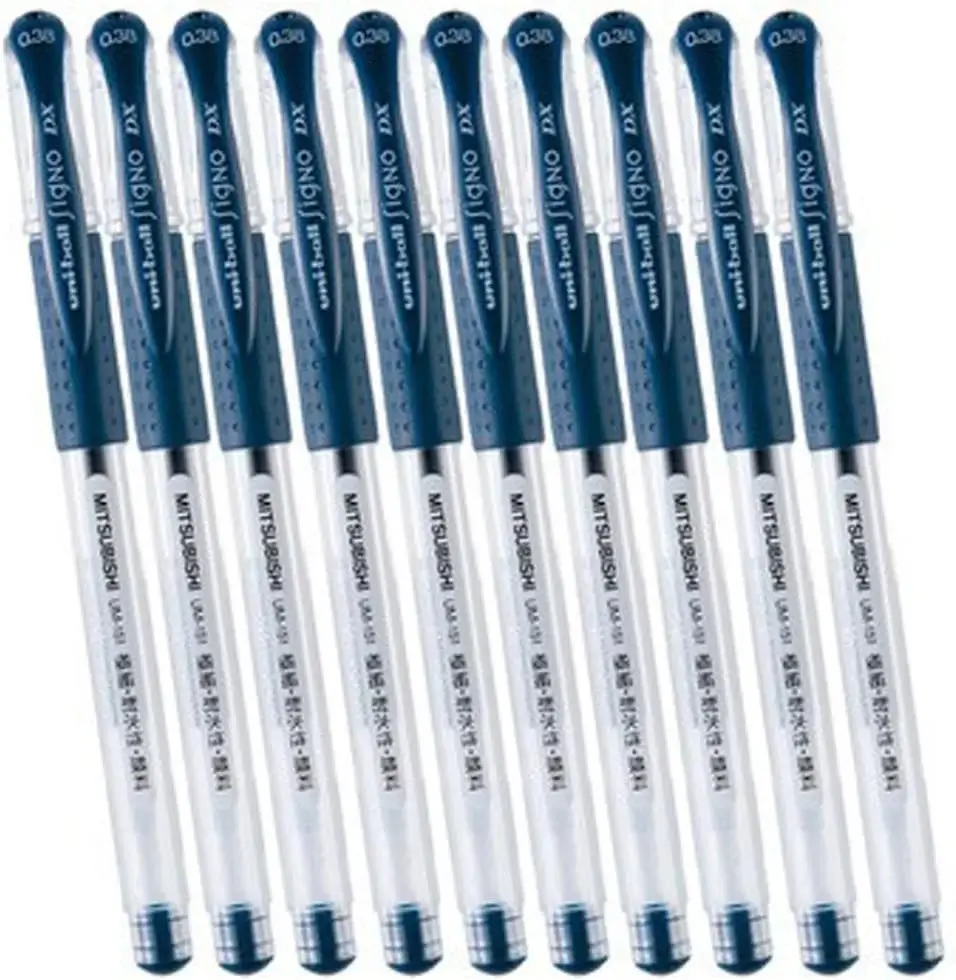
The Uni-ball Signo UM-151 is the pen we would reach for when the page is packed with tiny spaces, thin borders, small patterns, or fine line art. The 0.38 mm tip gives you much more control than a standard 0.7 mm gel pen, and that matters when you are coloring tight floral patterns, hair strands, fabric folds, tiny lettering, or small planner boxes. It does not flood the page, so you can place color exactly where you want it.
The writing feel is precise, with a little feedback from the tip. It is not scratchy, but it does remind you that you are using a fine pen. That slight drag can be useful for detail work because the pen does not run away from your hand. The pigment-based ink lays down with strong color for such a small point, and it behaves well on thin paper compared with wetter pens. It also does a good job of staying inside printed lines when you use a light hand.
The grip is better than a plain plastic stick pen, but it is still not a soft comfort grip. The small dimpled grip area helps, but after a long coloring session your fingers may still feel it. If you tend to press hard, this pen will feel less forgiving than an EnerGel or InkJoy. Use a relaxed hand and let the ink do the work.
Dry time is the main tradeoff. On absorbent paper, it can settle fast enough for careful work. On smoother planner paper, it needs more patience. Left-handed users can still use it, but they should test each paper first.
Pros
Crisp fine lines, strong color, clean detail, low bleed risk on thin paper, refill options in many markets.
Cons
Small grip, slower dry time than fast liquid gel pens, higher cost per pen than bulk coloring sets.
Best For
Books with tight patterns, tiny journal details, fine doodles, and artists who need clean gel lines without a thick ink trail.
2. Zebra Sarasa Push Clip Gel Ink
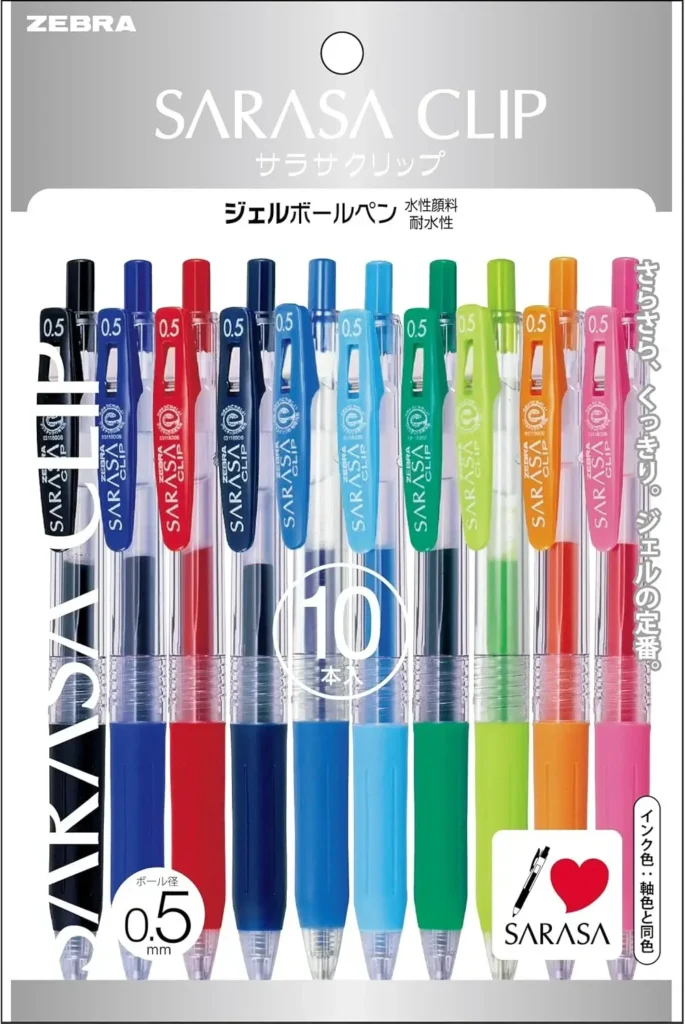
The Zebra Sarasa Push Clip is the kind of pen that makes sense when your page needs order. It writes smoothly, starts cleanly, and keeps color flow steady across everyday notes, planner boxes, headings, trackers, and small coloring touches. For people who use gel pens every day, that steady behavior matters more than flashy ink.
The 0.5 mm version is the safest pick for most users. It gives enough color to stand out, but the line is still thin enough for bullet journals and small handwriting. The ink is water-based pigment gel, and the standard colors are bright without looking childish. The Vintage sets are more muted, which makes them better for planners, study notes, and monthly layouts where loud color can get tiring.
The writing feel is smooth and low effort. It has less needle-like feedback than the Uni-ball UM-151, so it feels easier during longer sessions. The grip and barrel shape are also more forgiving. The clip is a real strength. It is wide, springy, and easy to attach to notebooks, folders, pouches, and planner covers.
Smudging depends on the color and paper. In testing, most colors dried in a normal gel pen range, but a few darker shades took longer on smooth planner paper. That is not unusual for gel pens, but it is worth noting if you are left-handed or use coated paper. On copy paper and standard journal paper, the Sarasa felt more predictable.
Refills are a plus, but buyers should check the exact refill by region and model. Many Sarasa Clip pens use JF-style refills, while some markets list them differently. Do not assume every Sarasa refill fits every Sarasa body without checking.
Pros
Smooth flow, good color range, strong clip, comfortable enough for daily use, refillable in many markets.
Cons
Dry time can vary by shade, some special colors are harder to find as singles, not as fine as the UM-151 for tiny spaces.
Best For
Bullet journals, planner color-coding, study notes, habit trackers, and anyone who wants a daily gel pen with better color choices than basic office packs.
Best for Bullet Journaling, Daily Writing, and Left-Handed Users
3. Pentel EnerGel Deluxe RTX 0.7 mm
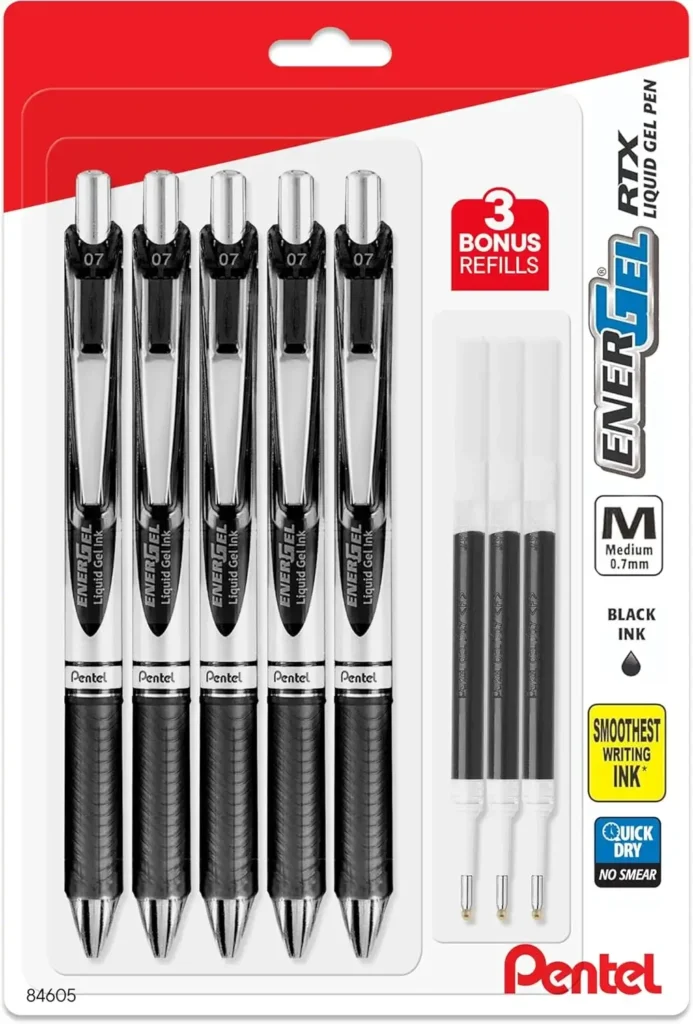
The Pentel EnerGel Deluxe is the pen that feels most ready for real note-taking speed. It lays down a dark, smooth line, but it dries faster than most colorful gel pens we tested. That makes it a strong pick for left-handed writers, fast class notes, meeting notes, and journal pages where you do not want to pause after every line.
The ink feel is different from a thicker pigment gel. EnerGel uses liquid gel ink, so it moves with very little pressure. The line looks bold and clean, especially in darker colors. It does feel wetter as it hits the page, but the dry-down is quick. On regular notebook paper, that balance is the main reason it stands out. You get a strong line without the long wait.
The 0.7 mm tip is best for writing, headings, and loose doodles. It is not the right choice for tiny coloring spaces. If you are filling detailed coloring book patterns, the line may feel too wide. But for daily writing, it is one of the easiest pens to trust. It starts fast, glides well, and does not need heavy pressure.
Comfort is another reason this pen works well for long sessions. The grip is wide, soft, and easy to hold. If your hand cramps with thin plastic pens, the RTX body will likely feel better. It also has a retractable design, so there is no cap to lose in a bag or desk drawer.
The downside is feathering on cheap copy paper. Because the ink flows freely, very thin or rough paper can make the line look wider than expected.
Pros
Very fast dry time, smooth line, strong dark ink, comfortable grip, easy refill path.
Cons
Line can spread on paper, not ideal for tight coloring, fewer special colors.
Best For
Left-handed writers, students, office notes, journal writing, and anyone who wants gel ink without smears.
4. Pilot G2 Premium Gel Roller
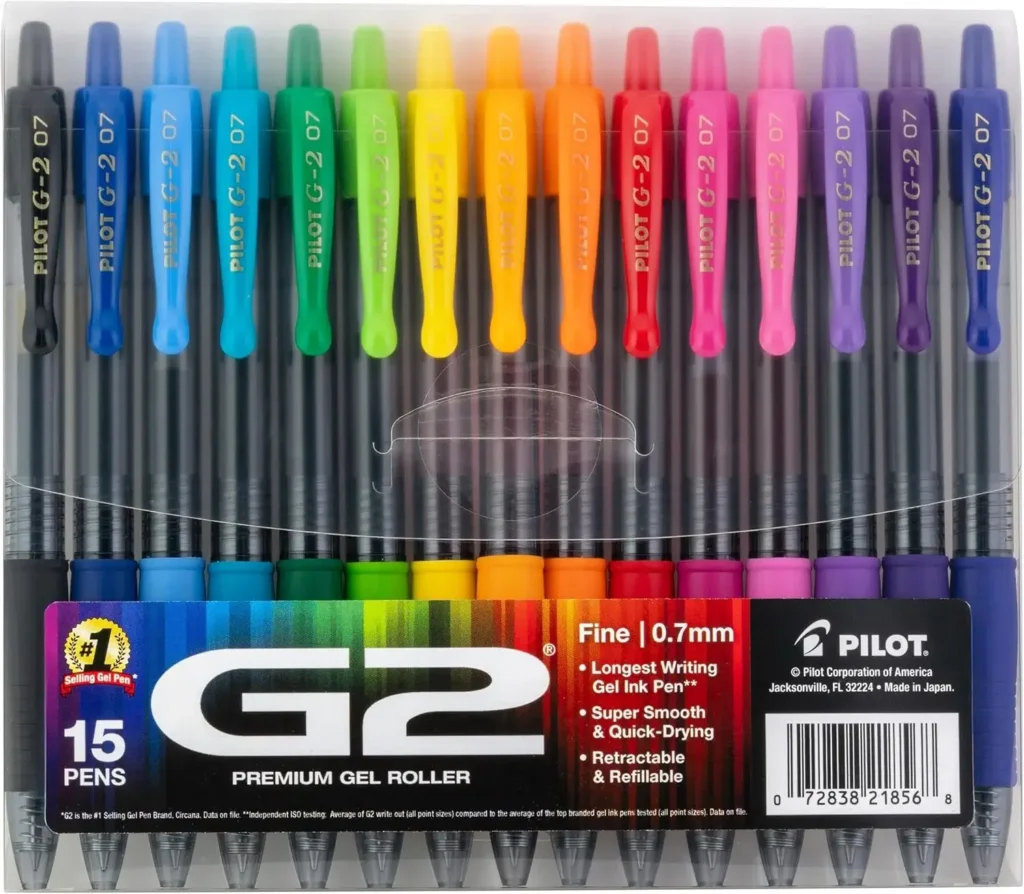
The Pilot G2 Premium Gel Roller is popular for a reason. It is easy to find, easy to refill, comfortable enough for daily writing, and familiar to almost anyone who has used office gel pens.
The writing feel has the classic gel bounce. The 0.7 mm conical tip is smooth, forgiving, and good for fast strokes. It is a nice pen for journaling, school notes, grocery lists, meeting notes, and casual color use. If you are not trying to do tiny coloring details or dark paper effects, the G2 can cover a lot of ground.
Color strength is solid in the standard colors. Black, blue, red, and darker shades perform best. Lighter colors can look less even, especially on cream paper or toothy notebook paper.
They can also show a little skipping if your hand angle changes or if the paper has texture.
Comfort is good for normal writing sessions. The ribbed rubber grip gives your fingers something to hold, and the retractable body is practical.
Over time, the grip can feel a little sticky or worn, especially if the pen lives in a hot bag or car. Still, it is more comfortable than many slim capped pens.
Dry time is average for a gel pen. It usually behaves well on copy paper and notebook paper, but smoother planner paper can slow it down. Left-handed users may want EnerGel first if smearing is a major issue. The G2 is usable, but it is not the fastest dryer here.
The biggest strength is access. Refills are widely sold, and the pen is easy to replace. That makes it a safe choice for people who do not want to search specialty shops or deal with set-only colors.
Pros
Easy to buy, refillable, comfortable, smooth, reliable for daily writing.
Cons
Average dry time, lighter colors may skip, not ideal for tiny art details, not great for dark paper.
Best For
Everyday writing, casual journaling, office use, students, and anyone who wants a known gel pen that works without much fuss.
5. Paper Mate InkJoy Gel Pen
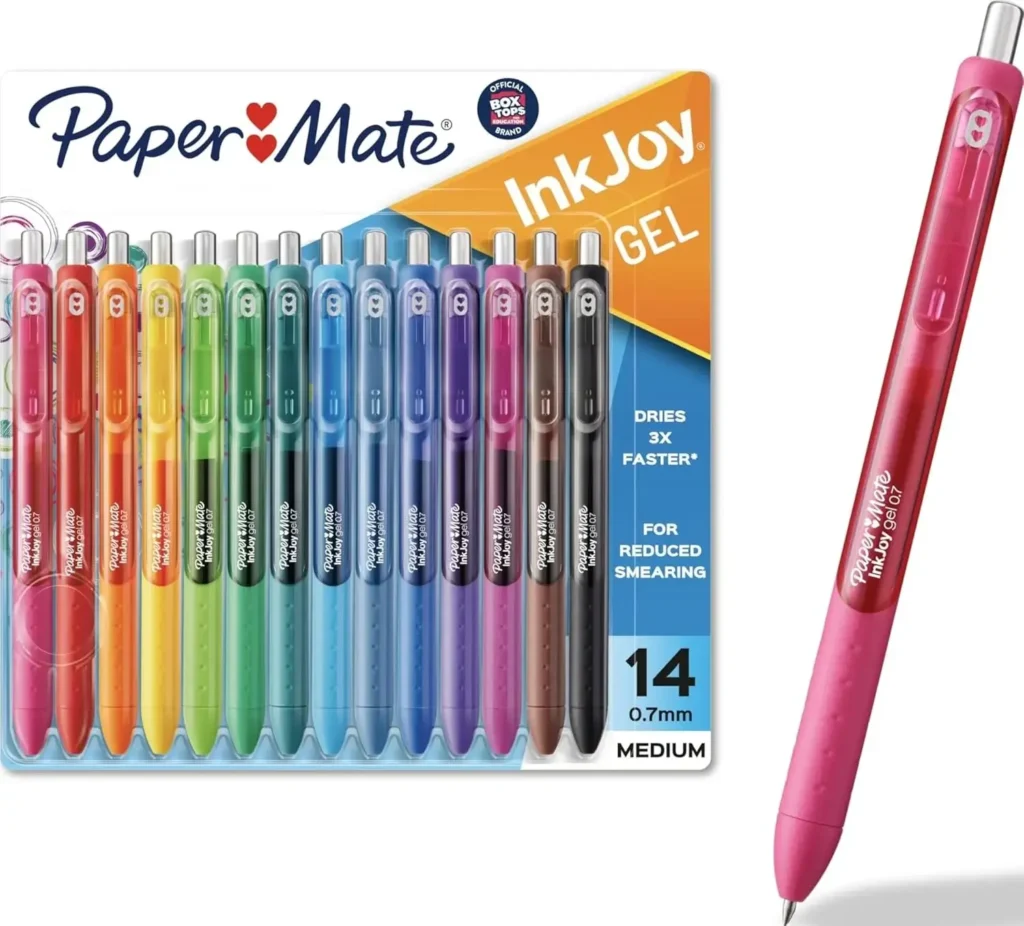
Paper Mate InkJoy is the pen for someone who wants bright color right now without ordering from a specialty stationery shop. It is sold in many office and school aisles, comes in useful color packs, and feels friendly from the first line.
The writing feel is smooth and bold. It does not have the same fine control as the Uni-ball UM-151 or Sarasa 0.5 mm, but it has a soft, easy flow that works well for notes and headings.
The 0.7 mm point puts down enough ink to make colors pop, which is why students and casual journalers tend to like it. It is less suited to tiny coloring areas because the line is fairly wide.
Color saturation is one of the better parts of the InkJoy. The basic shades are bright and cheerful, and the assorted packs give enough variety for school notes, calendars, and casual planning. The colors are not as refined as Sarasa Vintage, and they do not have the art effect of Sakura or ColorIt, but they do look lively on white paper.
The grip is a strength. The rubber wrap covers much of the barrel, which makes the pen easy to hold for a normal writing session. It is more comfortable than slim hard-barrel pens, especially if you press a bit harder than you should. The body is retractable too, so it works well in backpacks and pencil cases.
Dry time is good for a general gel pen, though still paper-dependent. On regular notebook paper it performs well. On slick planner paper, it can still smear if your hand crosses the line too soon. It may also blob slightly if you pause with the tip on the page.
Pros
Easy to find, bright colors, comfortable grip, smooth writing, good value in packs.
Cons
Not refillable, less precise, can blob, not made for long-term art storage.
Best For
Students, beginners, quick notes, school color-coding, and anyone who needs an easy gel pen set.
Best for Mixed Media, Dark Paper, and Artistic Effects
6. Sakura Gelly Roll Metallic Gel Pens
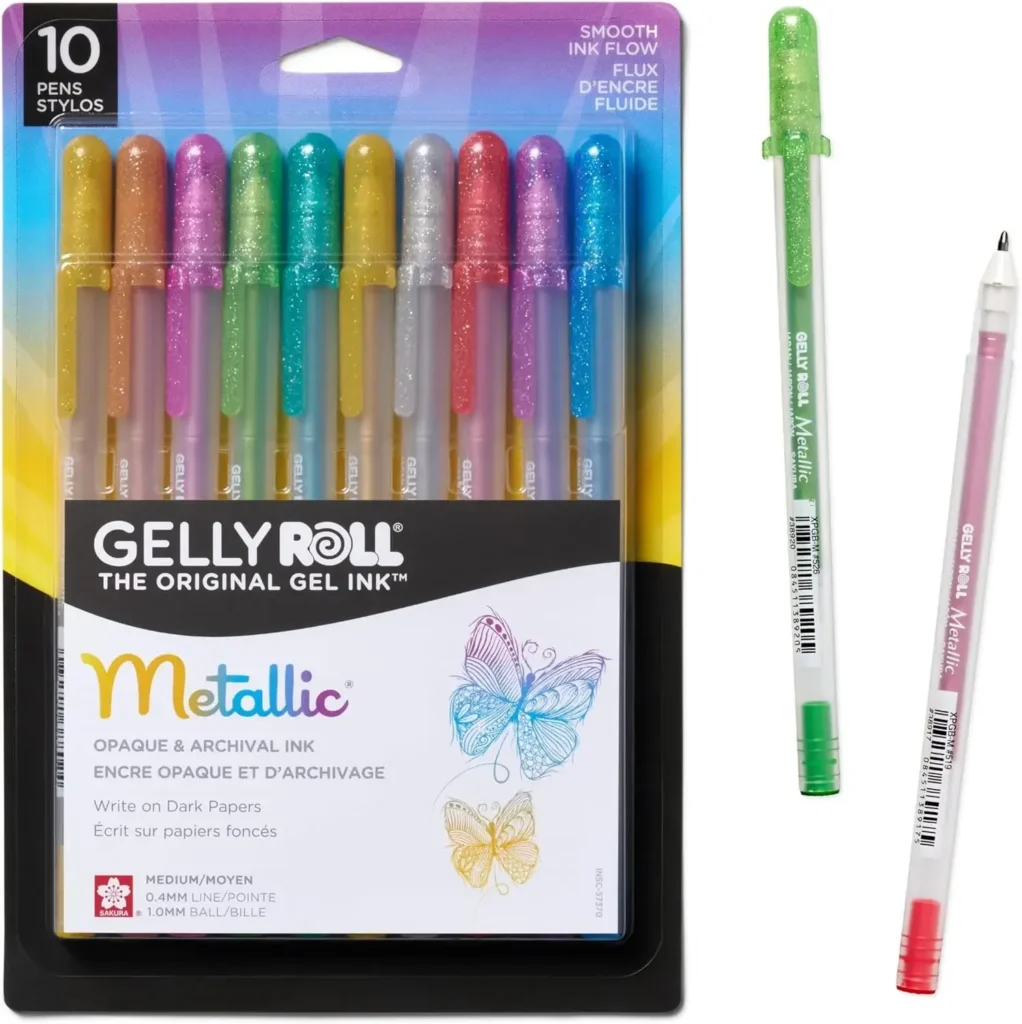
Sakura Gelly Roll Metallic pens are effect pens. Their strength is opacity, shine, and contrast on dark paper, kraft paper, cards, tags, scrapbook pages, and mixed-media pieces. If your project needs a line that catches light, this is one of the safest names to test first.
The writing feel is wet and deliberate. You cannot rush it like an EnerGel. The ink needs a slower hand so it can lay down evenly, especially on dark cardstock or glossy paper. If you move too fast, the line can look thinner or uneven. If you press too hard, you may get a small blob at the start. Once you slow down, the reward is a smooth metallic line with good coverage.
Sakura lists the Metallic line with a 1.0 mm ball that creates about a 0.4 mm bold line. That sounds odd at first, but it matches the feel. The ball is larger than a fine writing pen, yet the final mark is controlled enough for lettering, outlines, borders, and small accents.
The ink is pigment-based and Sakura describes it as archival quality, waterproof, and fade resistant when dry. Still, drying time is the price you pay. The dry time can be about 1 minute depending on paper, and our testing also showed that these pens need more patience than daily gel pens. Do not stack pages right away.
Pros
Strong metallic effect, works on dark and light paper, good opacity, strong for cards and accents.
Cons
Slow drying, simple barrel, can blob at the start, not practical for everyday notes.
Best For
Black paper, kraft paper, handmade cards, scrapbook accents, lettering, and mixed-media highlights.
Best Budget Pick for Students and Minimalists
7. Muji Gel Ink Ballpoint Pen
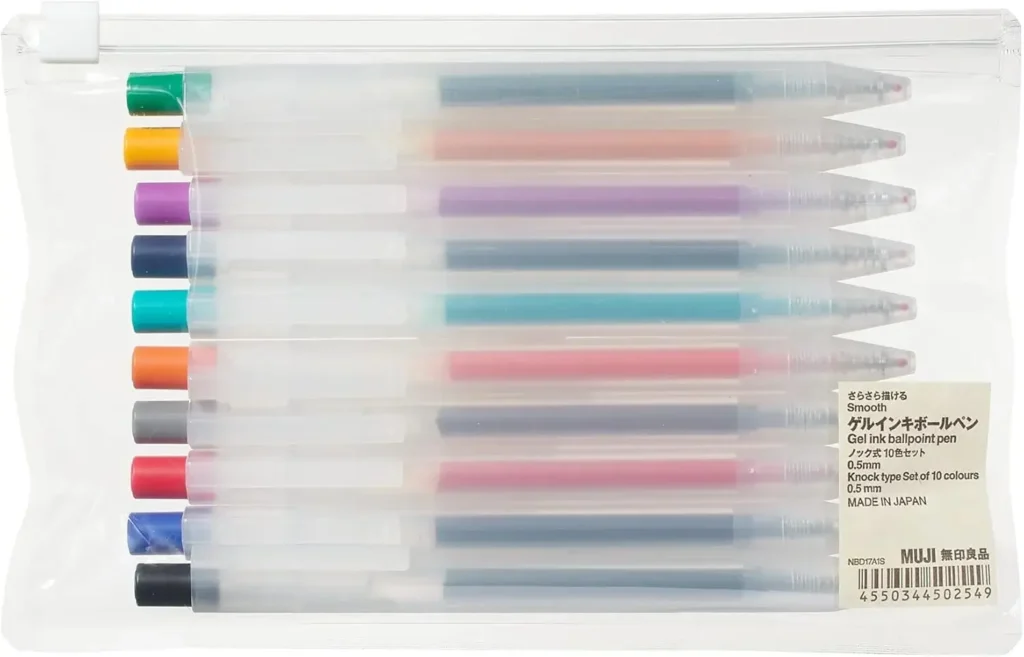
The Muji Gel Ink Ballpoint Pen is the opposite of a flashy art set. It is simple, slim, clean, and easy to use. If your goal is steady writing, neat notes, small planner entries, and a pen that does not look loud on your desk, Muji is a strong pick.
The writing feel is smooth and controlled. The 0.5 mm version gives a clean line that works well for small handwriting, checklists, calendars, and lecture notes. It has less ink spread than many 0.7 mm pens, so pages stay neat. The flow is lighter than EnerGel and less bold than InkJoy, but that can be a good thing for users who prefer clean pages over thick color.
Color saturation is quiet but accurate. Muji colors usually look close to what you expect from the pen body or refill label. They are not as bright as Paper Mate, not as muted as Sarasa Vintage, and not as shiny as Sakura. They sit in the middle, which makes them useful for everyday writing. For art, they are better for small line details than large fills.
Comfort depends on your hand. The body is slim and simple, with no soft grip. If you write for hours or press hard, it can feel tiring. If you use a light hand, it feels clean and balanced. The simple barrel also slips easily into narrow pen loops and small pouches.
The refill system is a major advantage. Muji sells gel ink refills in common tip sizes, including 0.5 mm in many markets. That keeps the cost down and makes the pen less wasteful than disposable gel pens.
Pros
Low price, clean line, refillable, simple look, good for small writing.
Cons
No cushion grip, color range varies.
Best For
Students, minimalists, planner users, travelers, and anyone who wants a slim refillable pen without extra bulk.
Best for Adult Coloring Sets and Larger Color Ranges
8. ColorIt Gel Pens for Adult Coloring
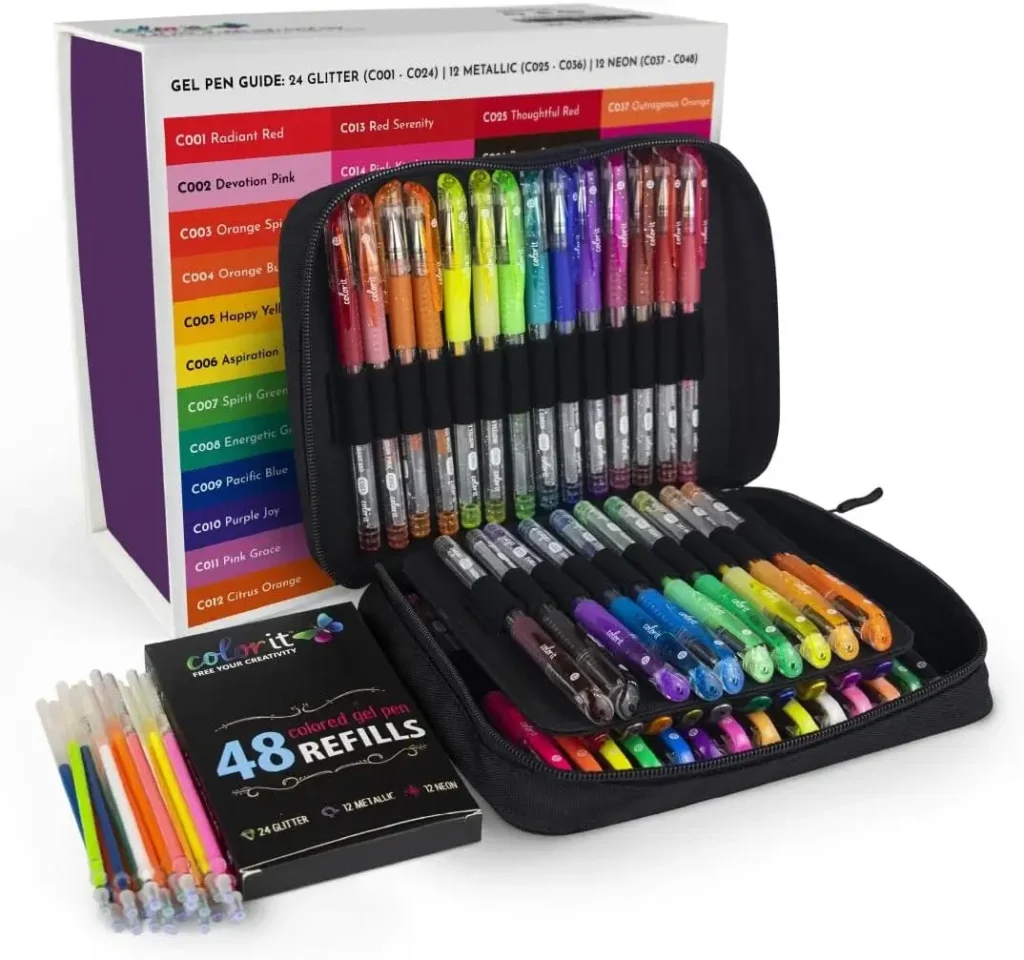
ColorIt Gel Pens are made for coloring first and writing second. The main strength is the set format. ColorIt sets commonly include matching refills, which is a real benefit for adult coloring.
Glitter and metallic shades run out fast when you fill large spaces, so having a refill for each pen makes the set feel more useful. It also lowers the stress of using your favorite color, because you are not saving it for later.
The tips are usually listed around 0.8-1.0 mm, which puts them in a coloring-friendly range. They are wide enough to fill space faster than fine writing pens, but still controlled enough for many adult coloring books. On tiny pattern work, they can feel too broad. On medium flowers, mandalas, borders, and decorative fills, they feel right.
Color payoff is the reason to buy them. The glitter shades are the strongest part of the set, especially on white coloring paper. Metallic and neon shades add variety, though they may not all perform equally on dark paper. For best results, use smooth coloring book paper and give each line time to dry before resting your hand on it.
Dry time is slower than daily gel pens. That is expected with heavier gel ink and effect finishes. If you fill large areas, work from left to right if you are right-handed, or right to left if you are left-handed. Rotate the page when needed. It prevents your hand from dragging through fresh ink.
Comfort is decent for casual coloring, but these are still set pens, not premium writing bodies. The barrels are light and simple. For long sessions, take breaks and switch colors often.
Pros
Strong set value, matching refills, glitter-heavy options, good for coloring books, broad color range.
Cons
Slower dry time, not precise enough for tiny spaces, simple barrel feel, quality can vary by finish.
Best For
Adult coloring books, glitter fills, mandalas, decorative borders, and users who want refills included in the set.
9. Castle Art Gel Pens
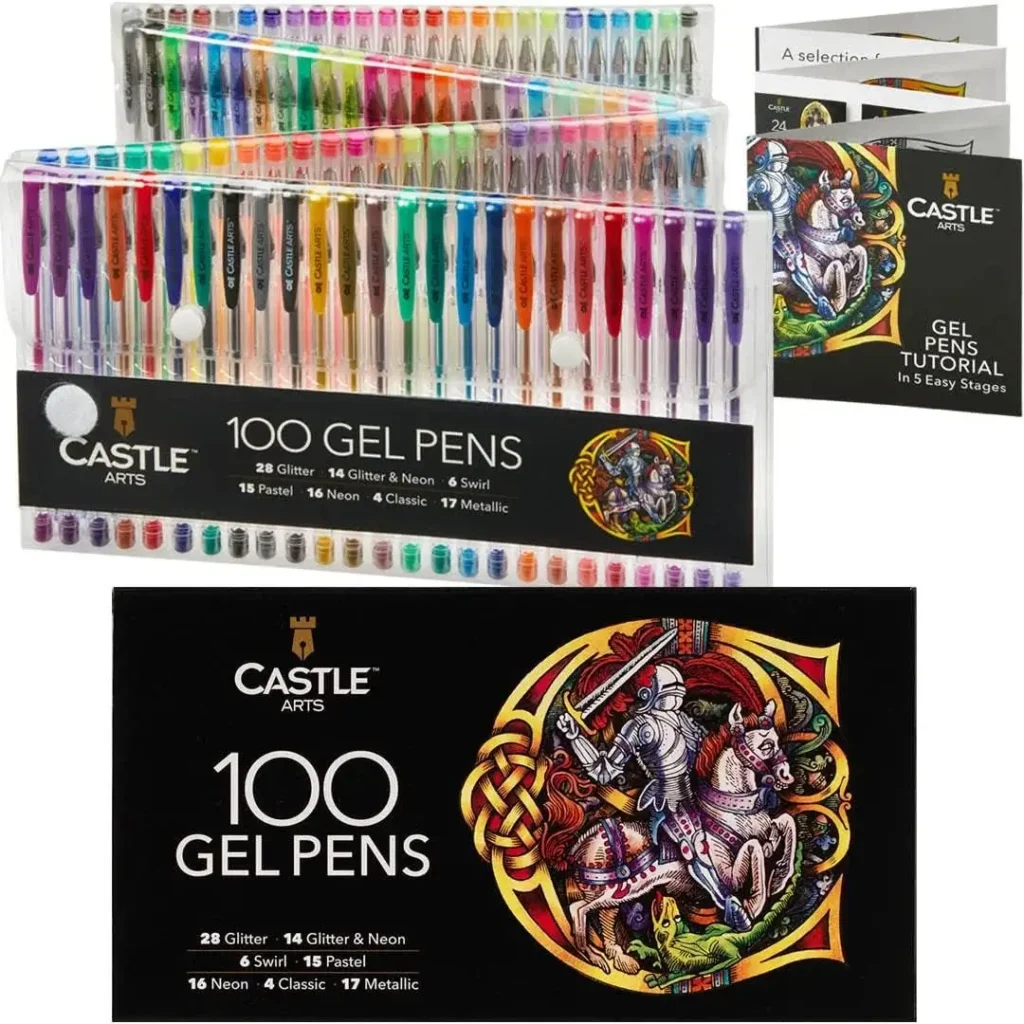
Castle Art Gel Pens are a good fit for people who want a large color set without spending time buying single pens one by one. The 100-piece sets are built around variety, with standard colors plus effect inks such as glitter, metallic, neon, pastel, and swirl.
Some colors feel smoother than others, and effect inks may behave differently from standard colors. Glitter shades often feel thicker. Neon shades may look bright on white paper but weaker on cream paper. Metallic shades may need the right light angle to show their effect. It is normal for this kind of set, but it matters if you expect every pen to feel identical.
The writing feel is smooth enough for coloring and decorative lines. The tips are usually fine enough for most adult coloring pages, though not as exact as Uni-ball UM-151. For tiny spaces, you may want a finer pen. For medium and large pattern areas, Castle Art works better because the ink coverage feels more generous.
Dry time is on the slower side, especially with glitter and metallic colors. Use a blotter sheet under your hand if you are working in a bound coloring book. On thin paper, test first. Some shades may show through more than others because the ink load is heavier than a daily writing pen.
Comfort is basic. The barrels are light, and that helps during casual use, but they do not have the cushioned feel of an office gel pen. The set value comes from color count, not body design.
Pros
Large color range, many effect finishes, good for crafts, strong value per pen, useful case format.
Cons
No strong refill path, finish quality varies, slower drying, not ideal for tiny detail.
Best For
Coloring book fans who want lots of colors, casual crafters, card makers, and families sharing one large set.
10. ARTEZA Fine Point Colored Gel Pens
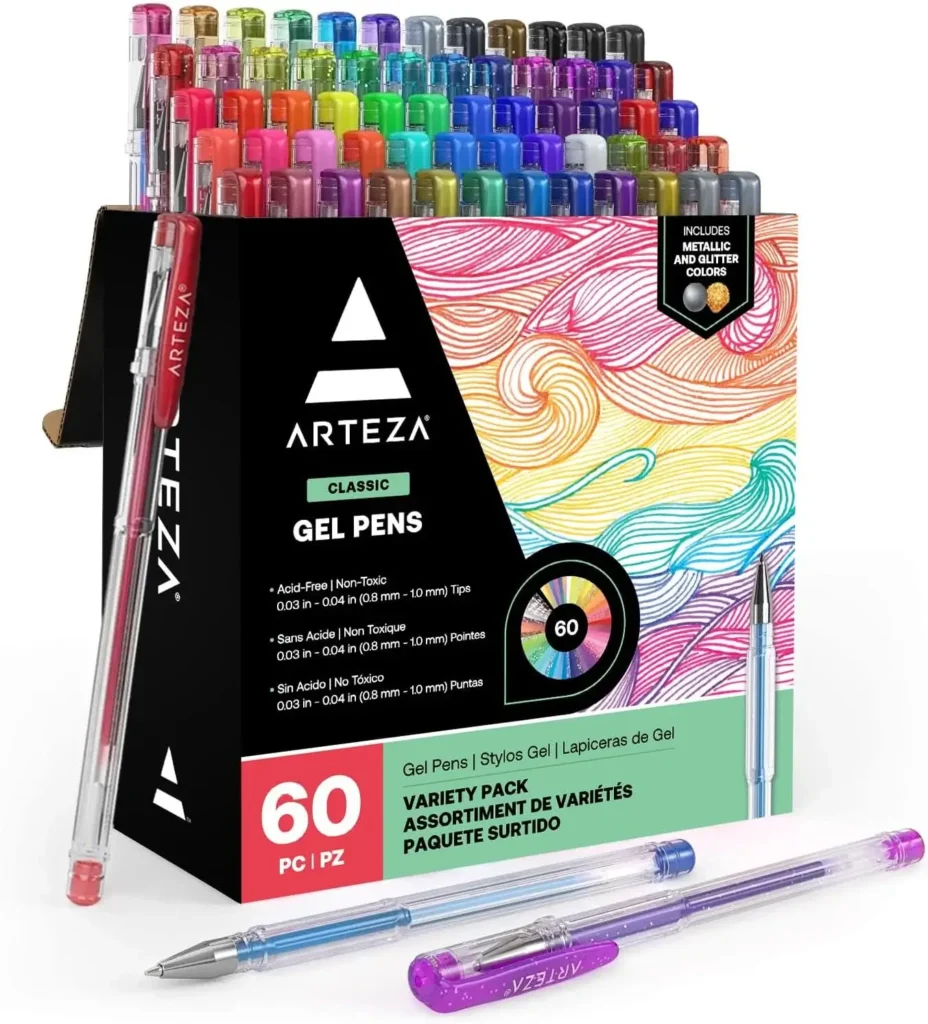
ARTEZA Fine Point Colored Gel Pens sit between basic school gel pens and larger adult coloring sets. The 60-color set is the one most people look at because it includes classic, pastel, neon, metallic, glitter, glitter-neon, and rainbow-style colors. That gives you more creative range than a standard writing pack without the huge case size of a 100-piece set.
The fine point is useful for decorative work. It is not as tiny as the Uni-ball UM-151, but it gives better control than many broad coloring pens.
The writing feel varies by finish. Standard and pastel colors usually feel smoother and more predictable. Glitter and metallic colors can feel a little thicker, which is common with effect gel ink. The rainbow-style colors are fun for accents, but they are not something most people will use for everyday writing.
Color strength is good on white paper. Pastels may look softer than the cap suggests, while glitter shades show best when the ink is laid down slowly. Metallic shades are better for accents than full blocks of color. On dark paper, do not expect the same coverage as Sakura Metallic. ARTEZA can work, but Sakura is the better dark-paper specialist.
Dry time is moderate to slow, depending on the finish. Standard colors are easier to manage. Glitter and metallic shades need more care. If you are left-handed, test the colors you plan to use before filling a full page.
Pros
Good mix of finishes, useful 60-color size, fine point works for details, strong for cards and doodles.
Cons
Finish feel varies, not the best for dark paper, no clear refill path for the whole set, slower dry time for effect inks.
Best For
Crafters, journal decorators, card makers, casual coloring, and users who want many effects without a huge case.
Some Other Noteworthy Gel Pen Picks


Color Accuracy, Smudge Times, and Counterfeits
Remember, cap color is a hint, not proof. For this test, the biggest misses came from soft and effect colors. In our samples, ColorIt coral read closer to peach on paper, Castle Art gold leaned bronze, and a few ARTEZA pastels dried lighter than the barrel suggested. The better matches were Pilot G2 blue, and Zebra Sarasa Vintage brown, which stayed close to the outside color.
Never judge a full set by the cap alone. Look for real swatches before buying, especially with pastel, glitter, neon, and metallic packs.
For smudging, Pentel EnerGel was the only pen that passed cleanly at 5 seconds on most paper. Pilot G2, Zebra Sarasa, Muji, and Paper Mate InkJoy were safer around 10 seconds, though smooth planner paper still needed care. Uni-ball Signo, ColorIt, Castle Art, ARTEZA effect inks, and Sakura Metallic needed 15 seconds or more, with Sakura often needing much longer on coated or dark paper.
Left-handed writers should pair EnerGel with a blotting sheet for daily notes, then save Sakura, ColorIt, and Castle Art for slower art sessions.
For safer buying, use brand online stores, known stationery shops, or office retailers with clear return policies. If the pack looks off, compare it with official images before opening every pen.
How to Choose the Right Colorful Gel Pen: A Buyer’s Guide
1. Understand Your Project
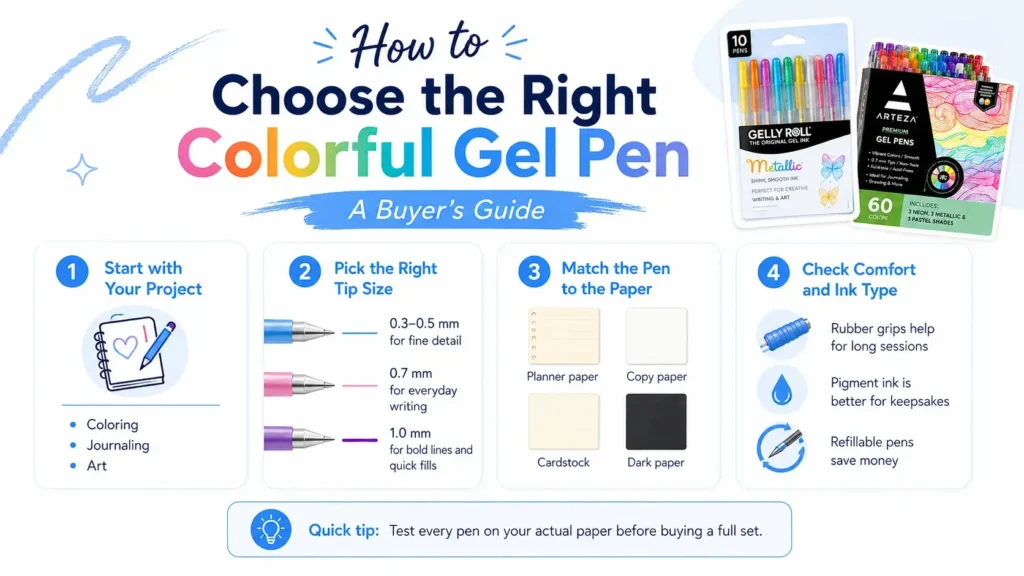
The best gel pen depends on what you are making. A pen that feels great for class notes may be too broad for small coloring spaces. A glitter pen that looks great on a card may be too slow for a planner. Before buying a full set, decide if you need detail, speed, dark-paper coverage, comfort, or long-term value.
2. Pick the Right Tip Size
Tip size controls both line width and dry time. For detailed coloring, small planner grids, fine outlines, and tiny handwriting, choose 0.3-0.5 mm. These tips put down less ink, so they are easier to control and usually safer on thin paper.
For daily writing, 0.7 mm is the middle ground. It gives a clear line without feeling too thick. This size works well for journaling, school notes, office notes, and headings.
For bold titles, large fill areas, cards, and decorative accents, 1.0 mm can look great, but it also puts more wet ink on the page. That means a longer wait before you touch the line.
3. Match the Pen to the Paper
Paper can change a pen completely. Smooth planner paper often keeps ink sitting on top longer, so quick-dry pens are safer there. Standard copy paper absorbs faster, but very wet pens can feather. Cardstock handles most gel ink well, but rough cardstock may need a broader tip so the line does not look broken.
Thin coloring book paper needs the most care. Fine tips are usually better because they place less ink on the sheet. If you are using dark, kraft, or toned paper, normal gel pens often look weak. Use opaque effect pens, such as Sakura Gelly Roll Metallic, for that job.
Test first on the same paper you plan to use. A pen can pass on copy paper and still smear badly in a planner.
4. Choose Pigment or Dye Carefully
Pigment ink usually sits more on the paper surface. It is often better for water resistance, fade resistance, and keepsake work, but only trust those claims when the brand states them clearly.
Dye ink often looks bright at first because it soaks into the paper fibers. The tradeoff is that some dye-based colors can fade faster in sunlight or react more with water.
If the page will stay in a notebook, you do not need to overthink it. If the art will be framed, gifted, or displayed, check for brand lightfastness notes.
5. Consider Grip Before Long Sessions
Comfort matters after 30 minutes. Slim hard barrels are fine for quick notes, but they can tire your hand during long coloring sessions. Rubber grips help reduce pressure, especially if you hold pens tightly.
Retractable pens can feel slightly heavier near the tip because of the click mechanism. Capped pens often feel lighter and more balanced, but caps are easier to lose. Pick based on how you actually use pens, not just how they look in the pack.
6. Check Refills Before You Buy
Refillable pens cost more at first, but they can save money if you write or color often. Uni-ball Signo, Pilot G2, Pentel EnerGel, Zebra Sarasa, and Muji all have refill paths. Paper Mate InkJoy Gel and Sakura Gelly Roll Metallic are better treated as replace-when-empty pens.
Always match the refill code to the exact pen body. A refill can look similar and still write too wet, sit too loose, or fail to fit.
7. Store and Maintain Gel Pens Properly
Store gel pens flat in a case when possible. It helps keep ink spread evenly inside the barrel. Keep them away from heat, direct sun, and dusty drawers. For capped pens, press the cap on fully after use.
If a pen starts skipping, do not press harder right away. First, scribble lightly on scrap paper. If dried ink is sitting on the tip, wipe it with a lint-free cloth. For stubborn buildup, use a barely damp paper towel, then test the pen on scrap before going back to the real page.
8. Be Careful with Layering
Gel ink needs time to dry before you add anything over it. Do not use alcohol markers over fresh gel ink unless the brand says it is safe. The solvent can smear, lift, or blur the line.
For clean mixed-media work, use this order: marker first, let it dry, then gel pen accents on top. Let the gel ink set before closing the book or stacking pages.
Simple Buying Rule
Buy one or two singles before committing to a large set. Test the color, grip, dry time, and paper behavior. If the pen feels good on your actual paper, then the full set is worth considering.
Summing Up
Colorful gel pens can look similar in a pack, but they do not act the same on paper. After testing them for color match, dry time, smudging, comfort, and real use, the best choice comes down to what you plan to make.
Fine tips are better for tight coloring spaces. Fast-drying pens are better for notes and left-handed writing. Metallic and glitter pens are better for cards, dark paper, and art accents.
The safest move is to try open-stock singles first when you can. Test them on your own planner, journal, coloring book, or cardstock before buying a full set.
Happy coloring!