
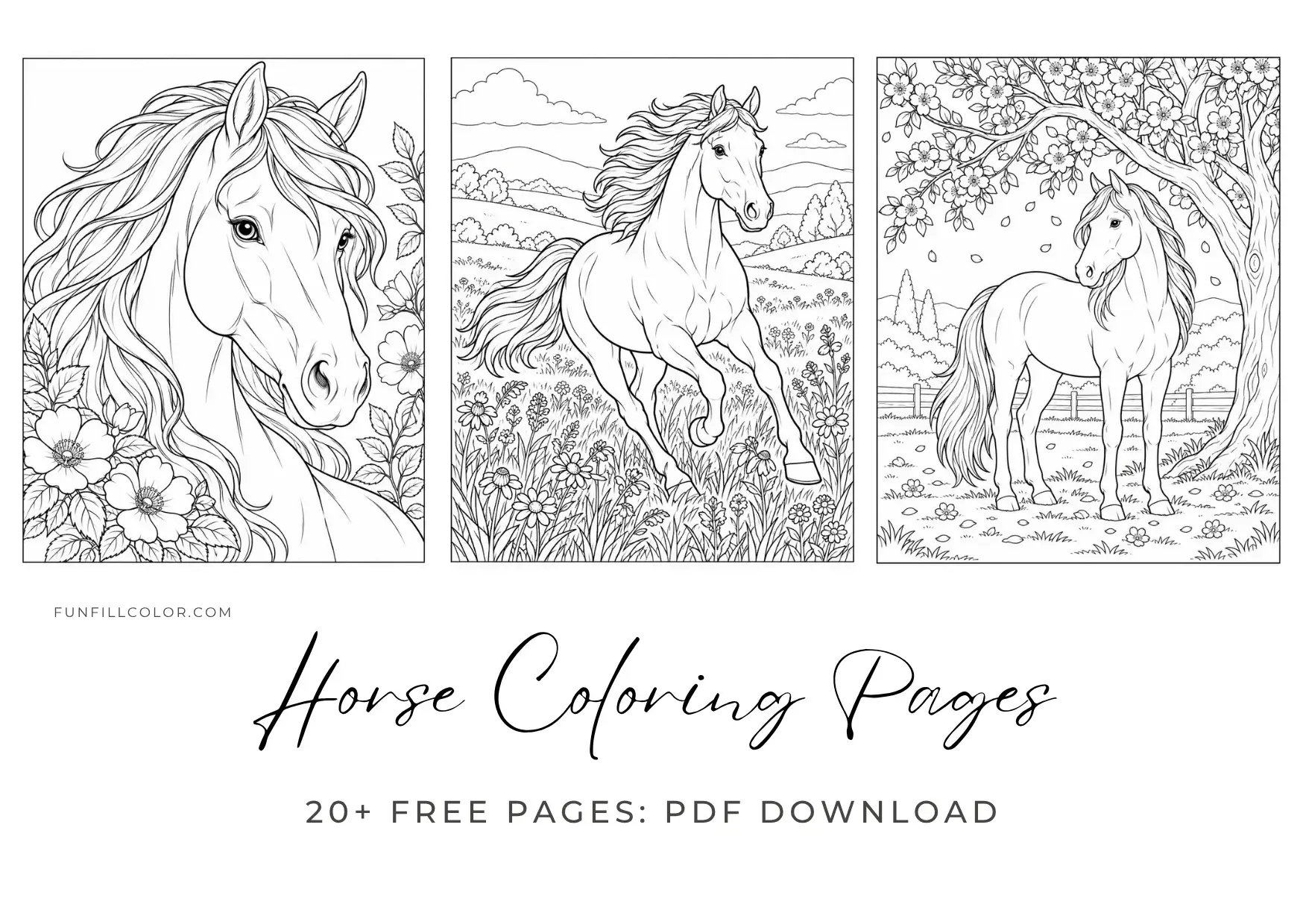
There is something satisfying about coloring horses. A flowing mane gives you room to play with color, open fields work well for softer backgrounds, and small details such as flowers, saddles, leaves, fences, and tack keep the page interesting without taking attention away from the horse.
I put together 20 horse coloring pages with different settings, poses, and moods so the collection feels varied from beginning to end. Some pages focus almost completely on the horse, while others include meadows, mountains, flowers, beaches, forests, or stable details.
You can keep the horses realistic with browns, blacks, chestnuts, grays, and creams, or ignore realistic coat colors and use whatever palette you feel like trying. The pages work well with colored pencils, crayons, markers, or a mix of supplies.
Horse Coloring Pages to Download
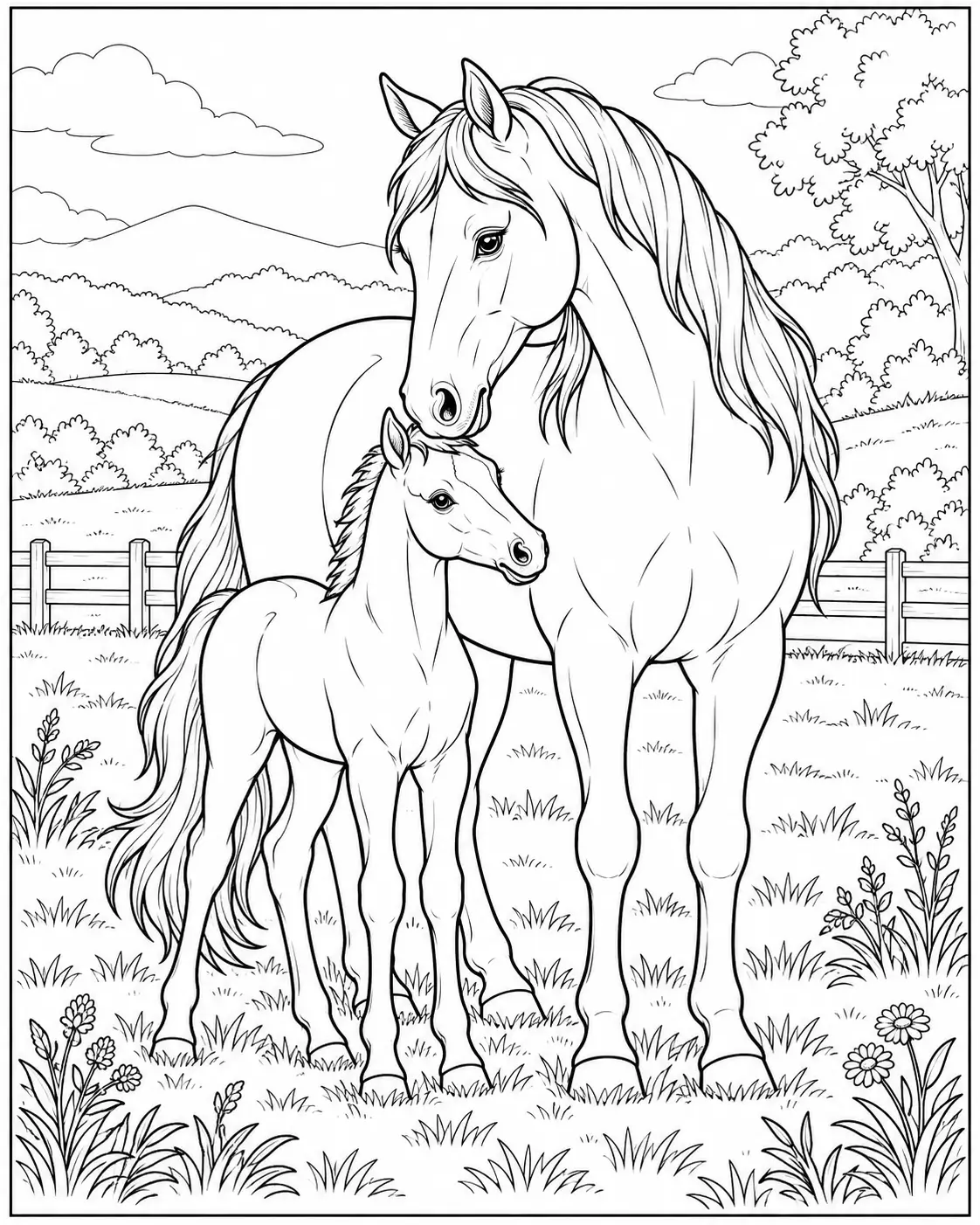
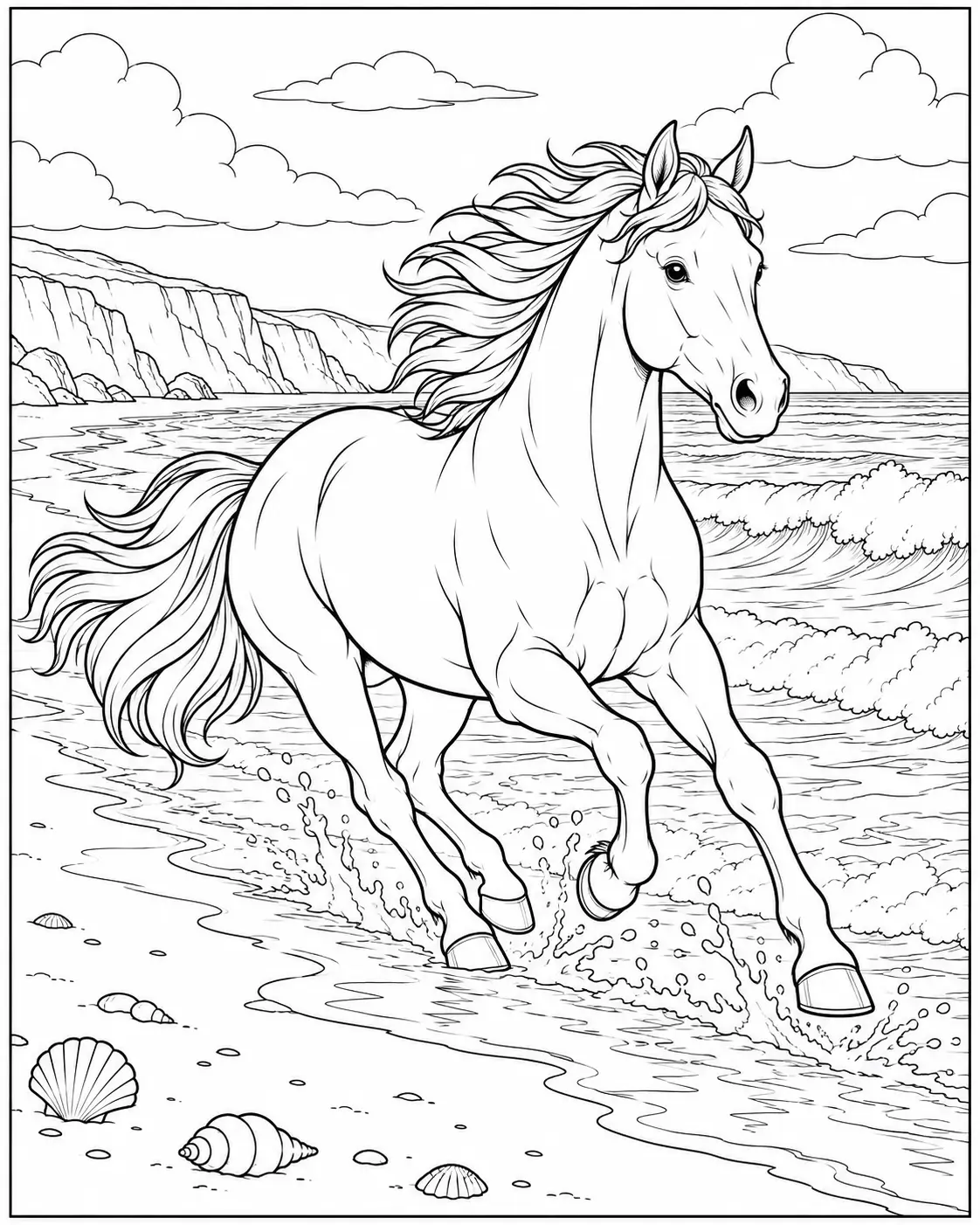
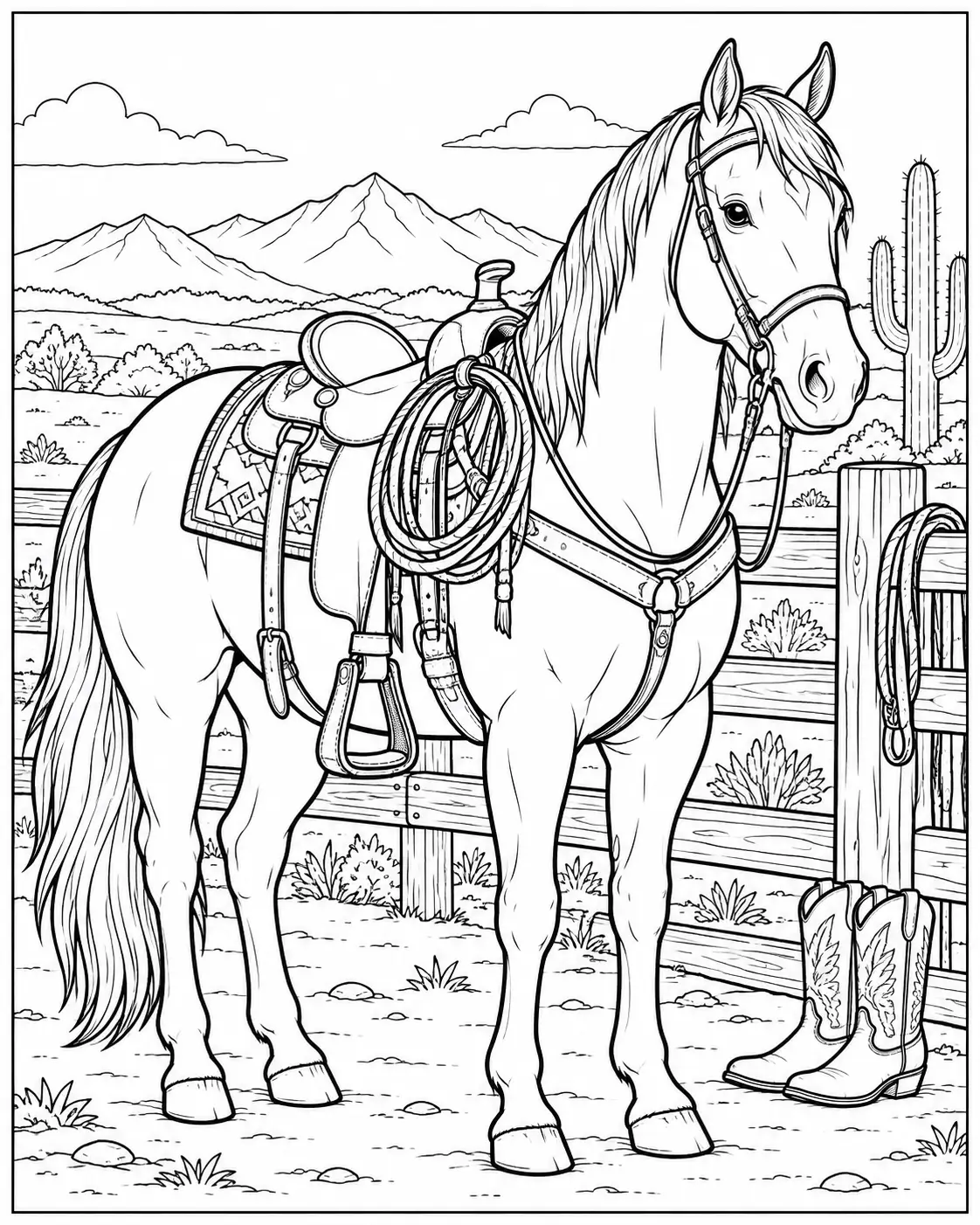
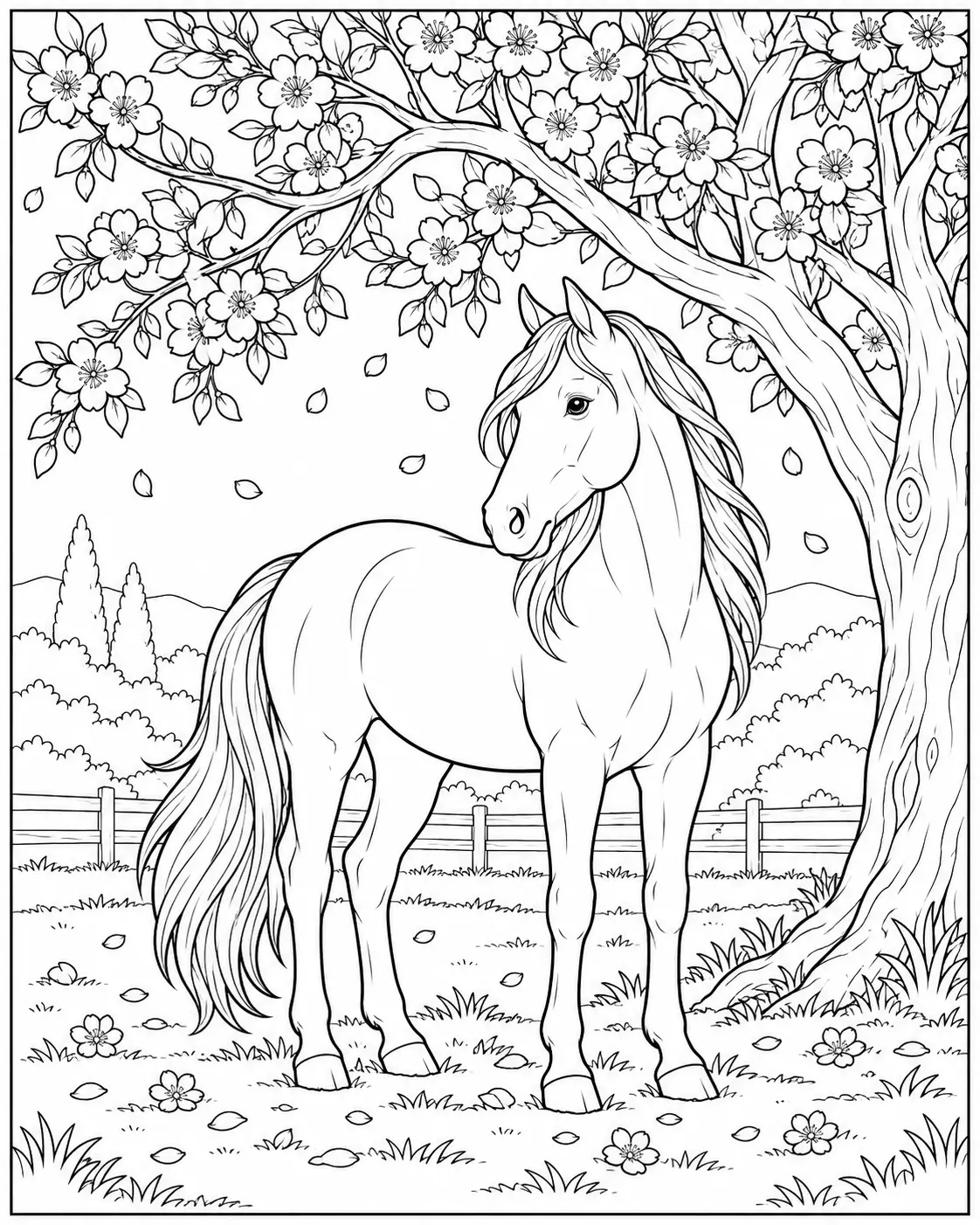
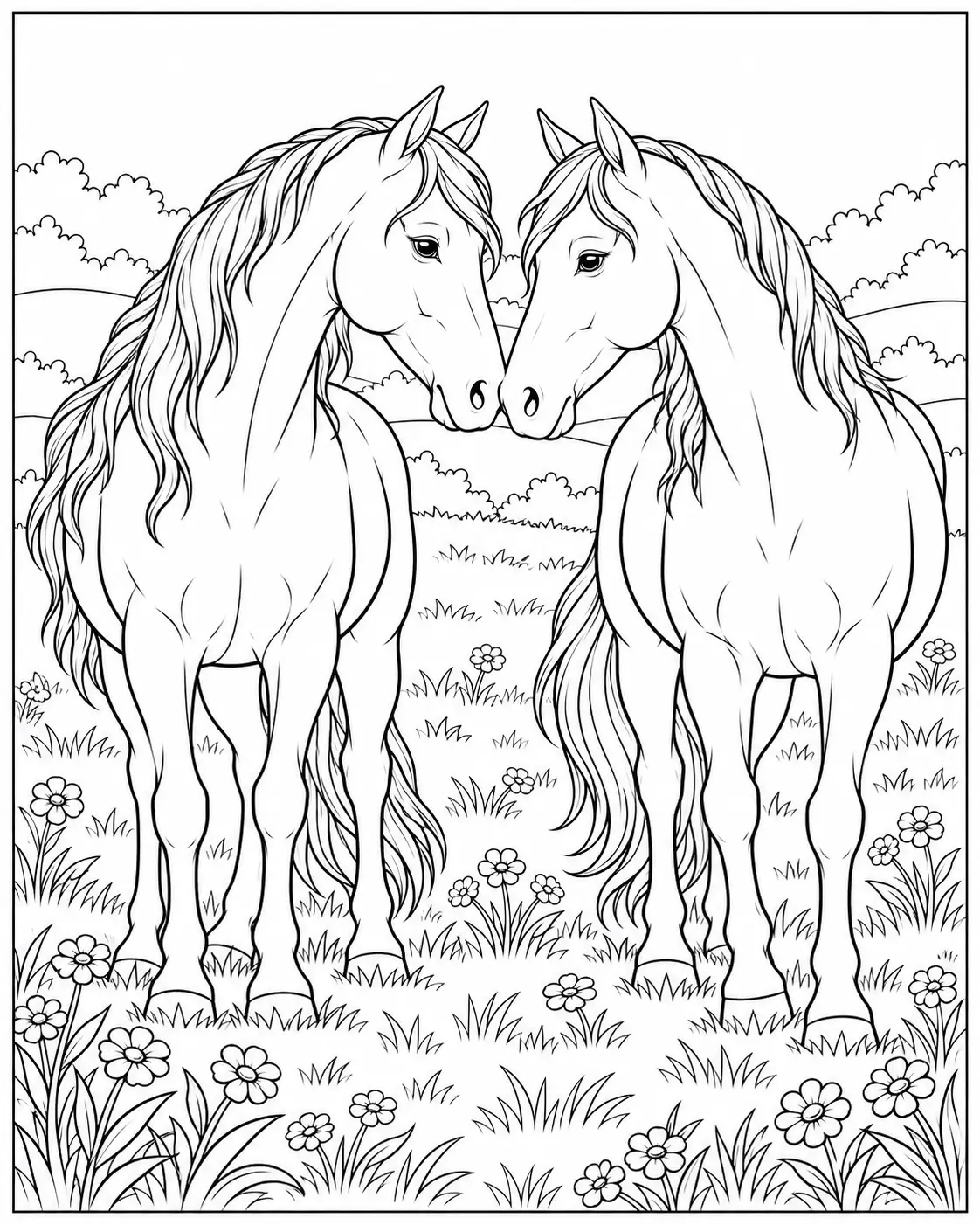
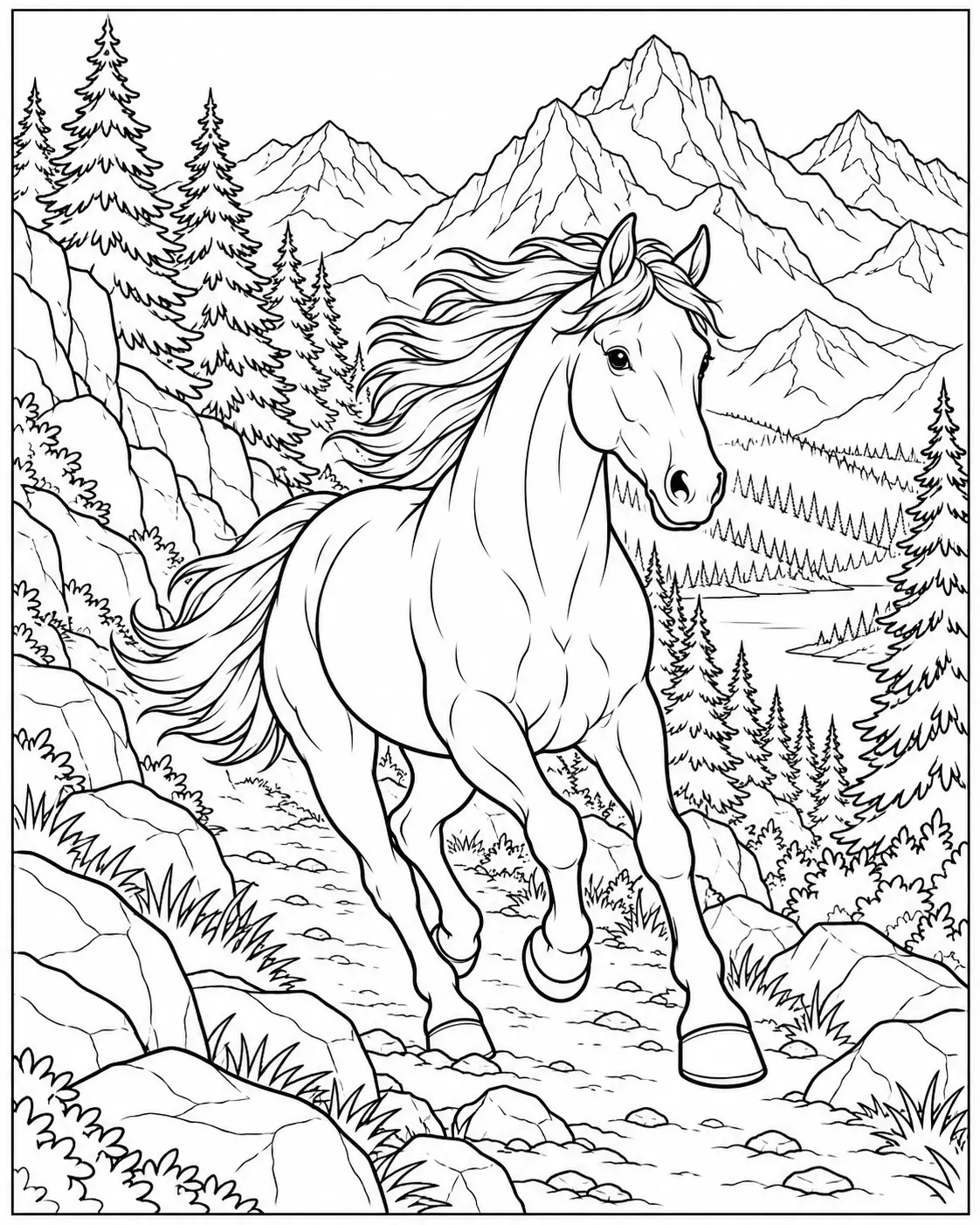
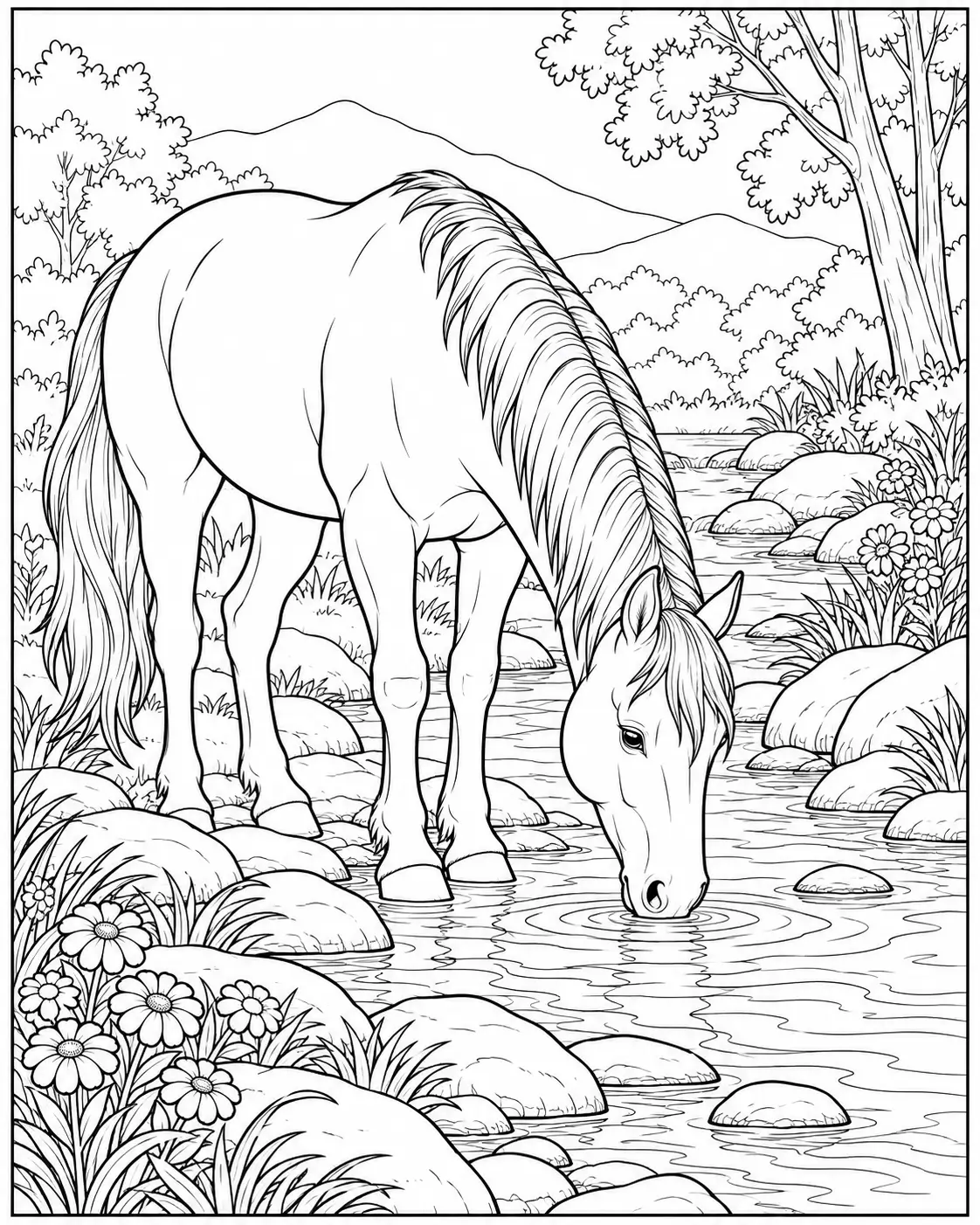
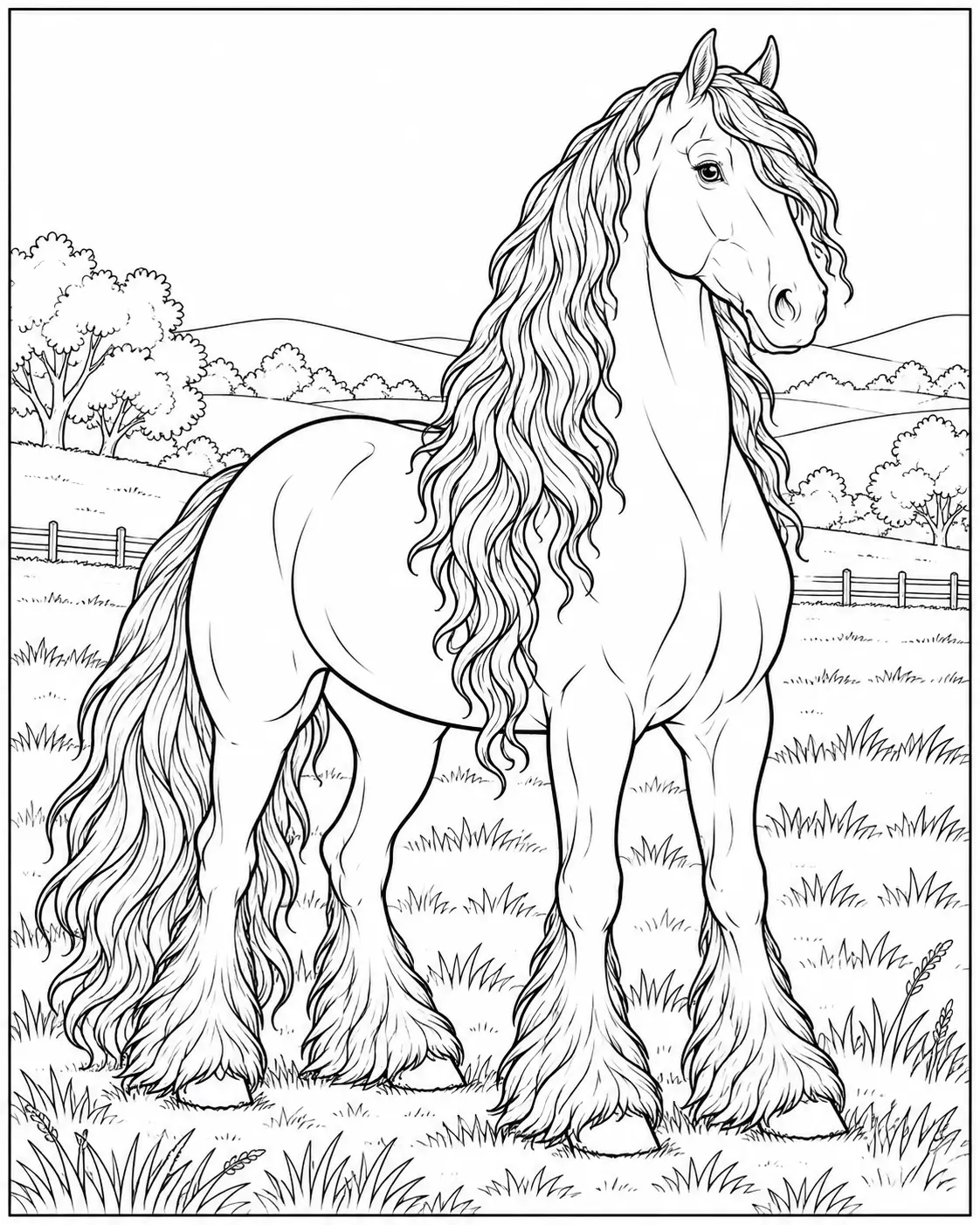
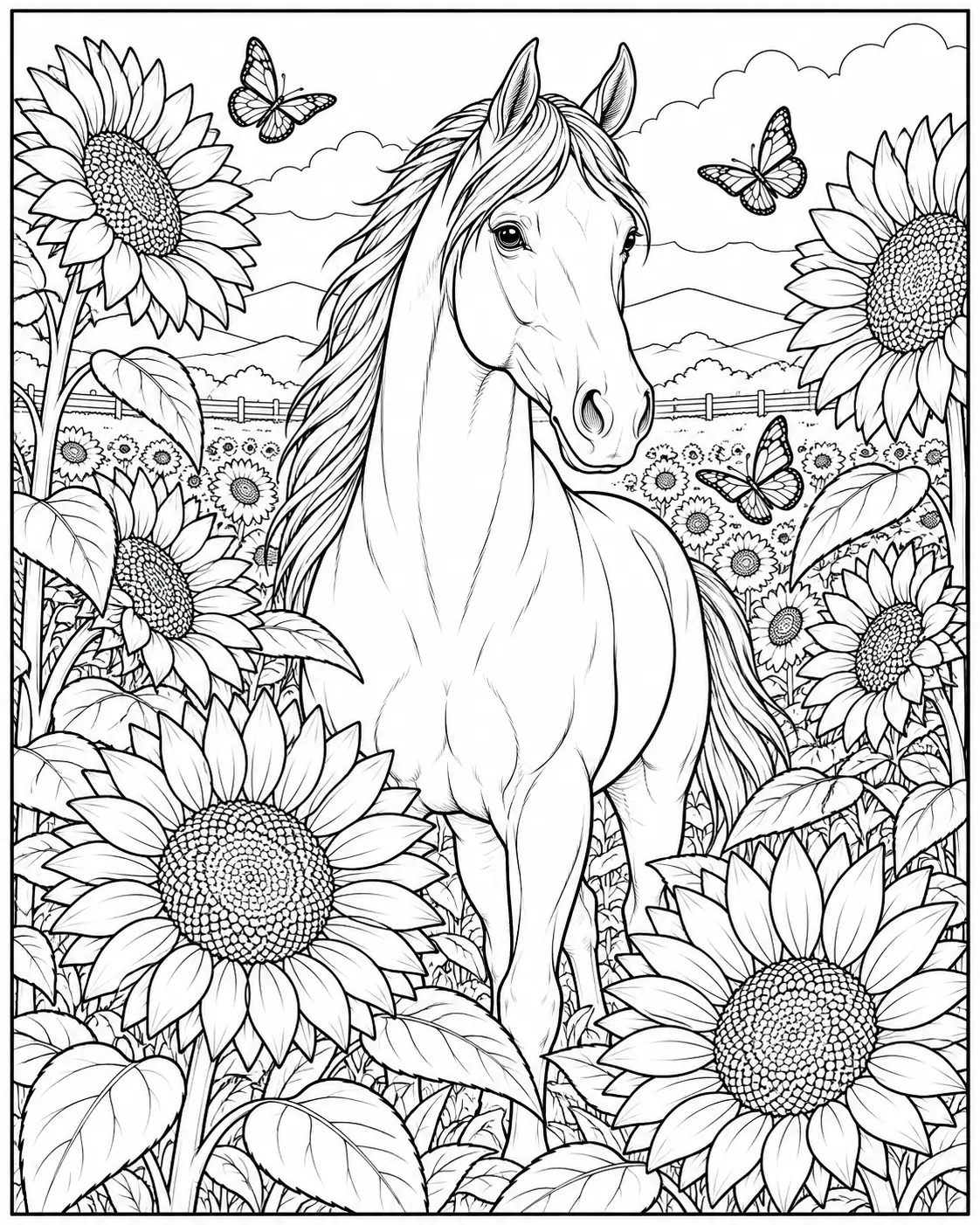
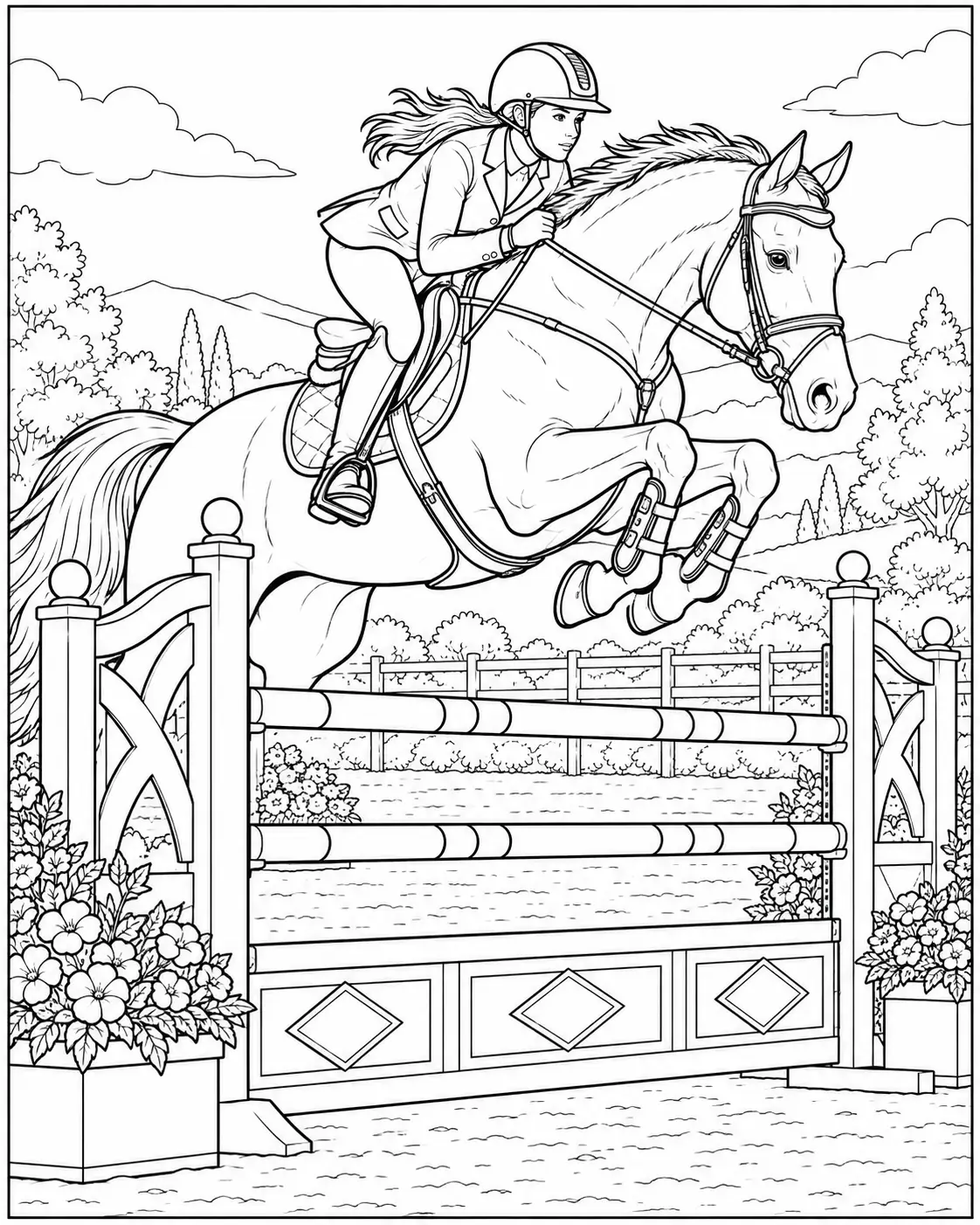
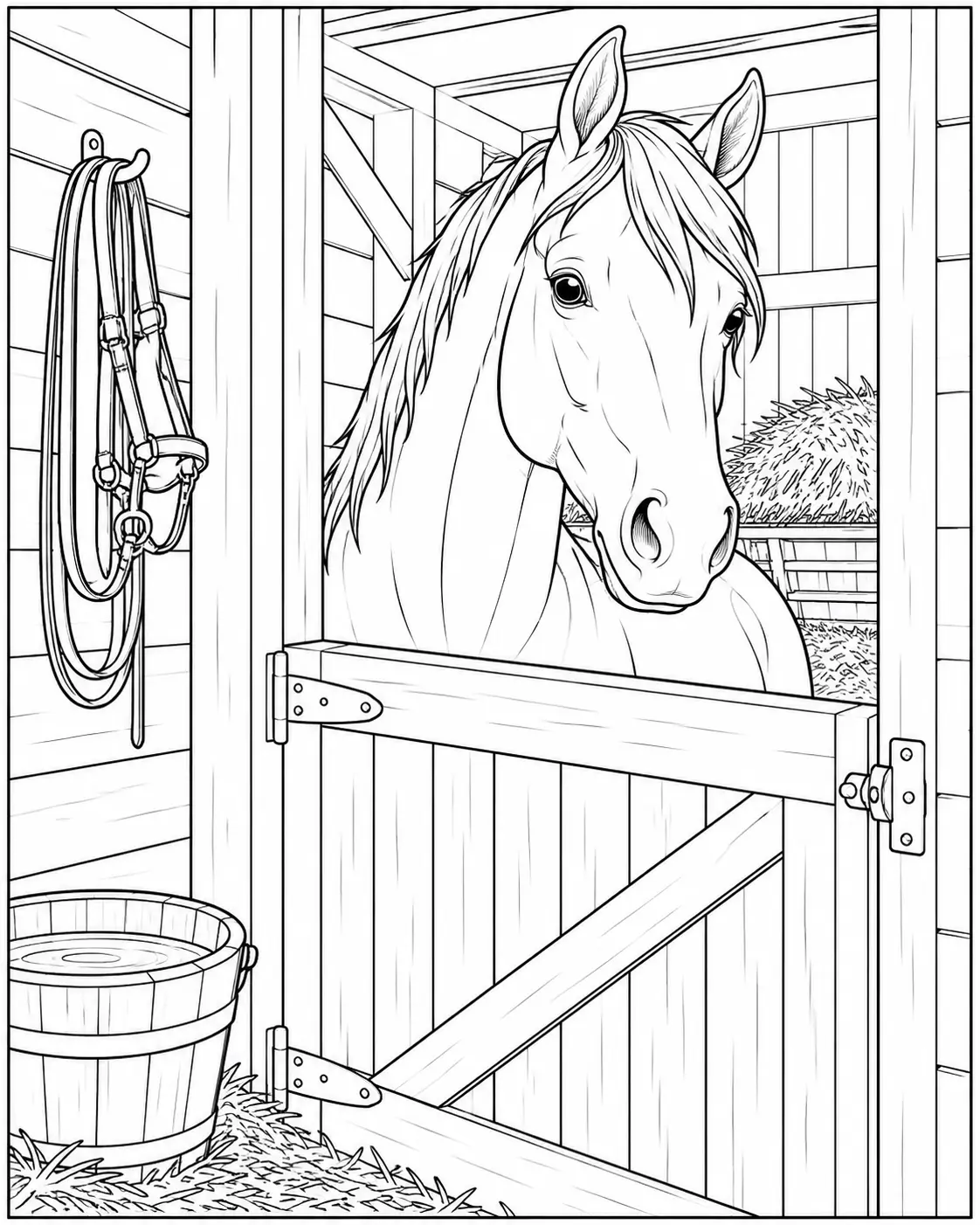
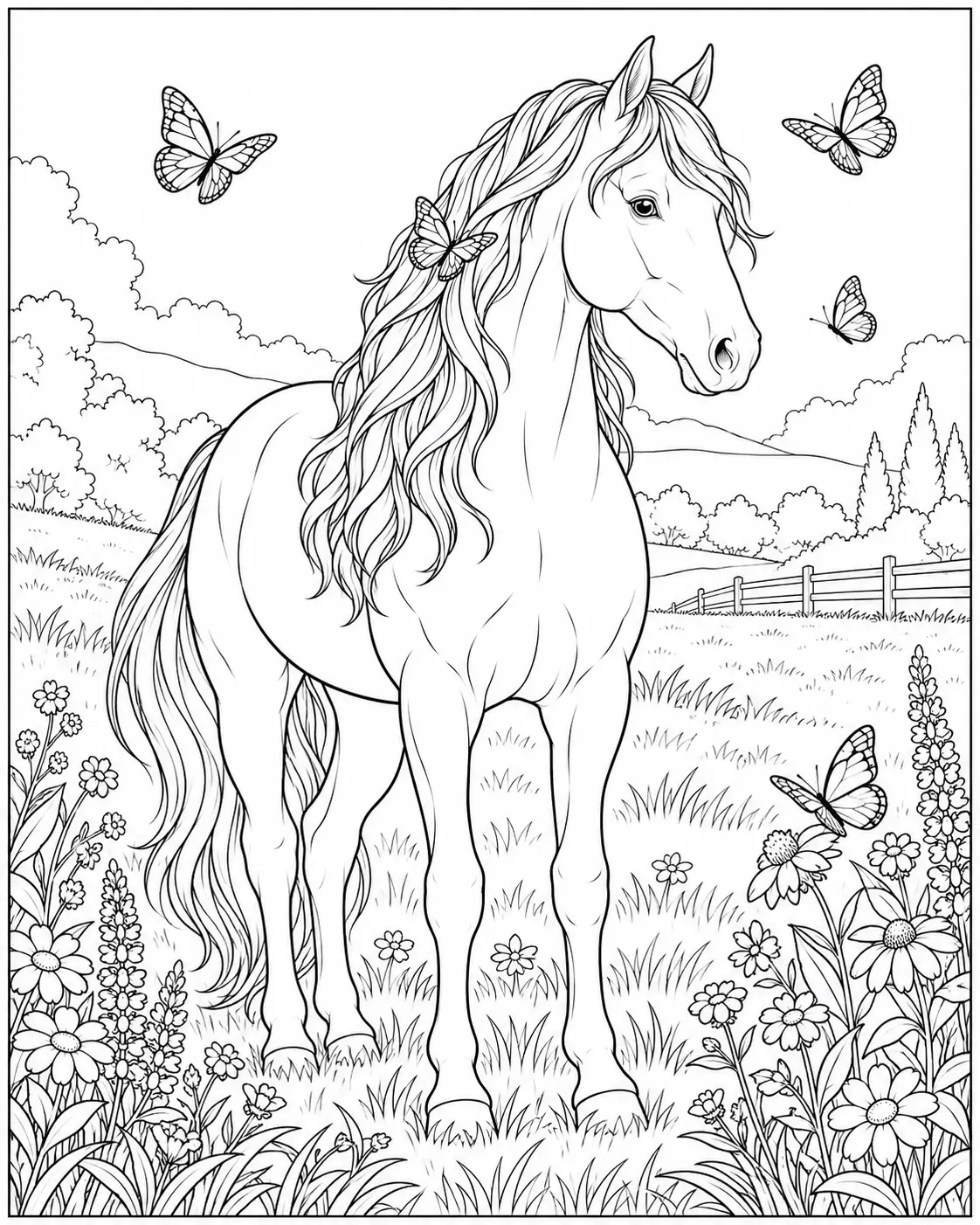
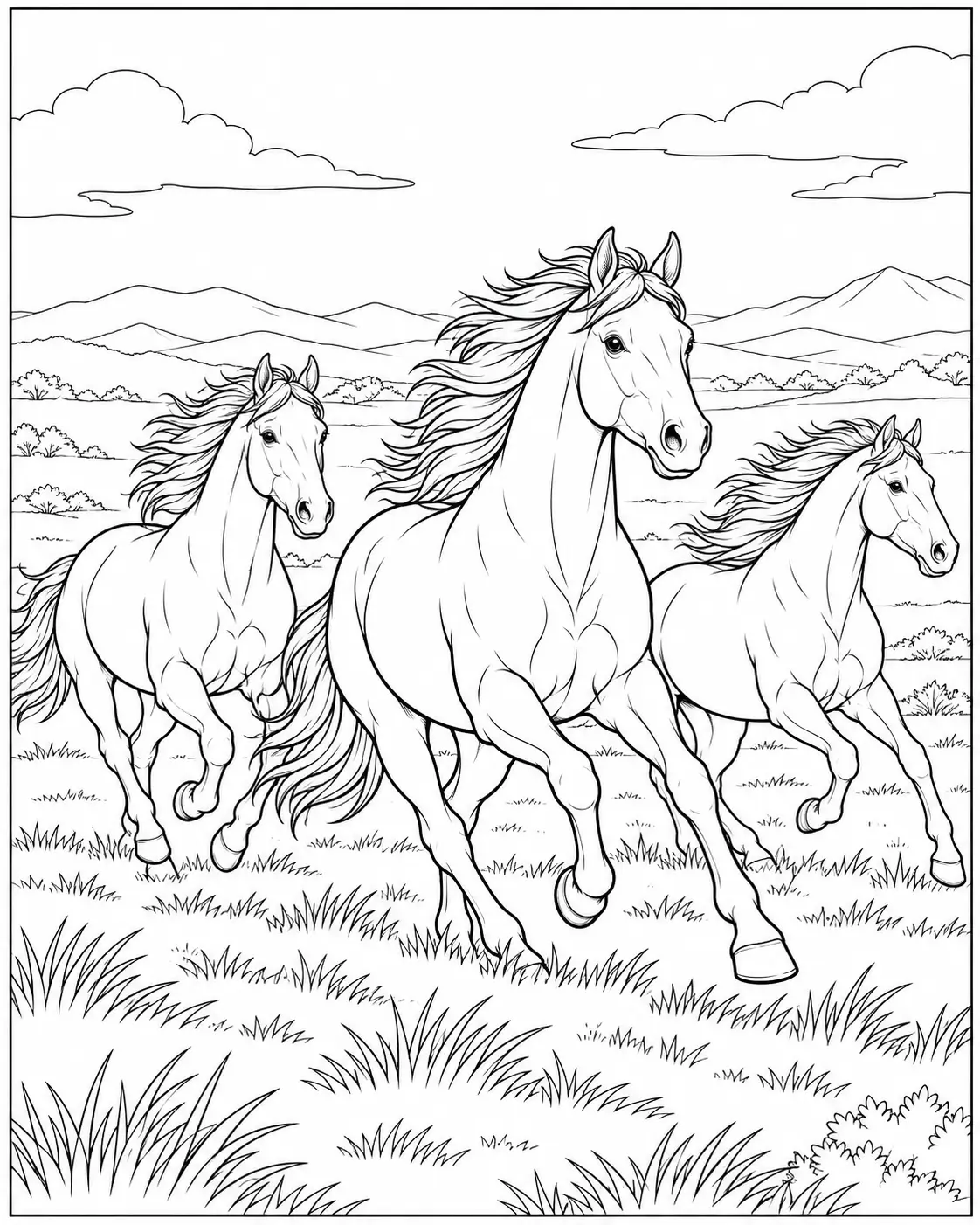
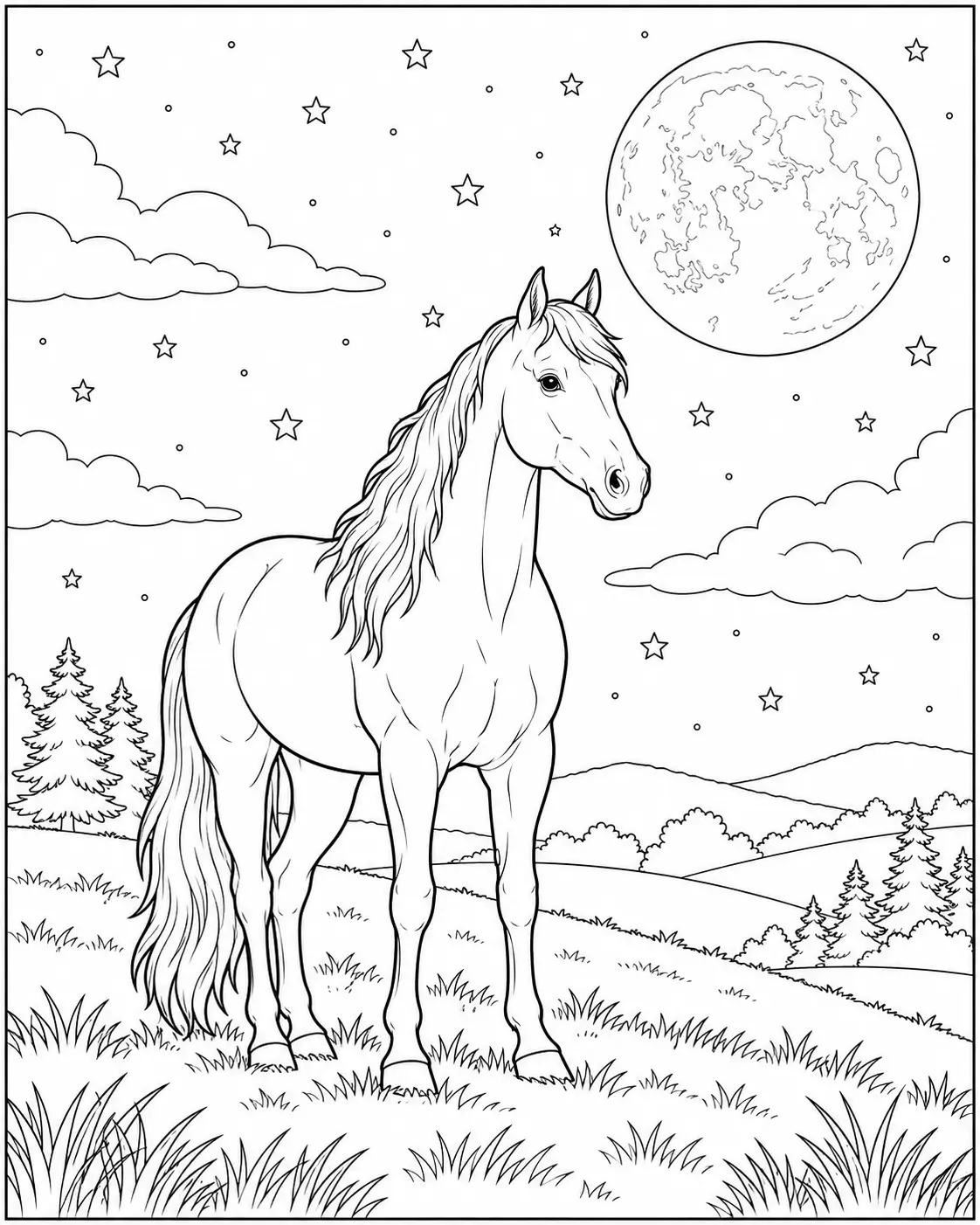
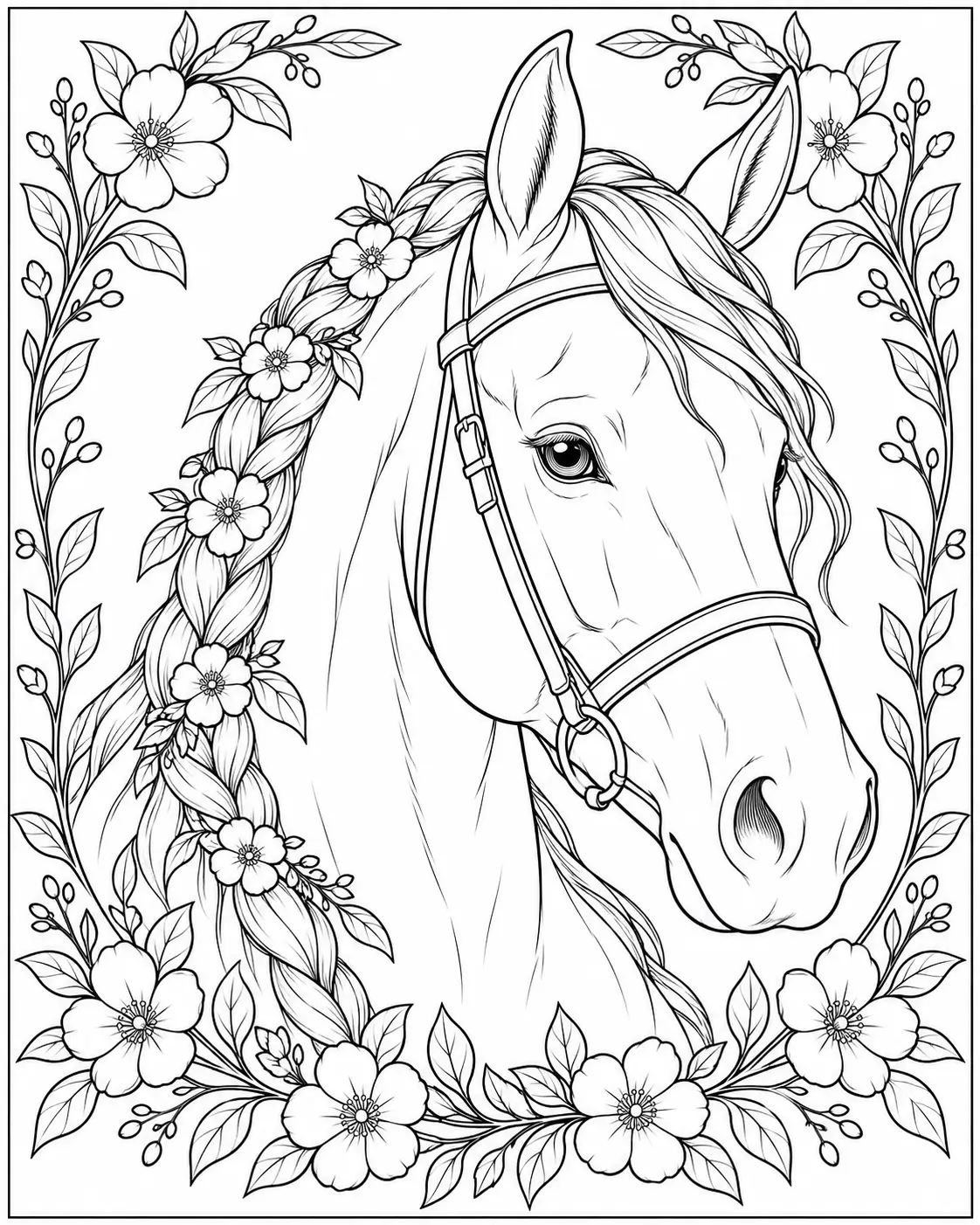
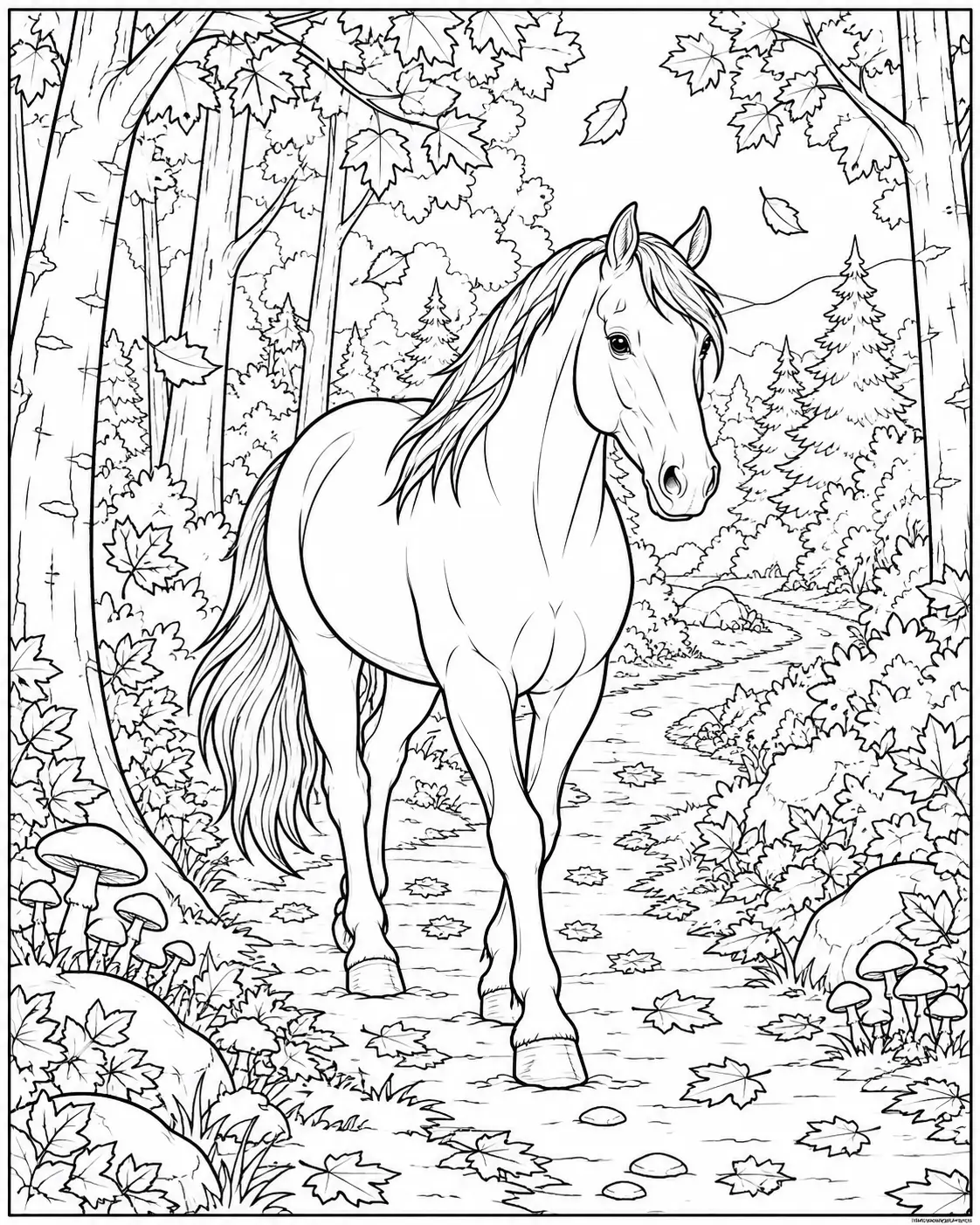
A Horse Coloring Collection with Plenty of Variety
Twenty pages can start to feel repetitive quickly when every horse has the same pose and the background only changes slightly. I wanted this set to give you noticeably different pages instead.
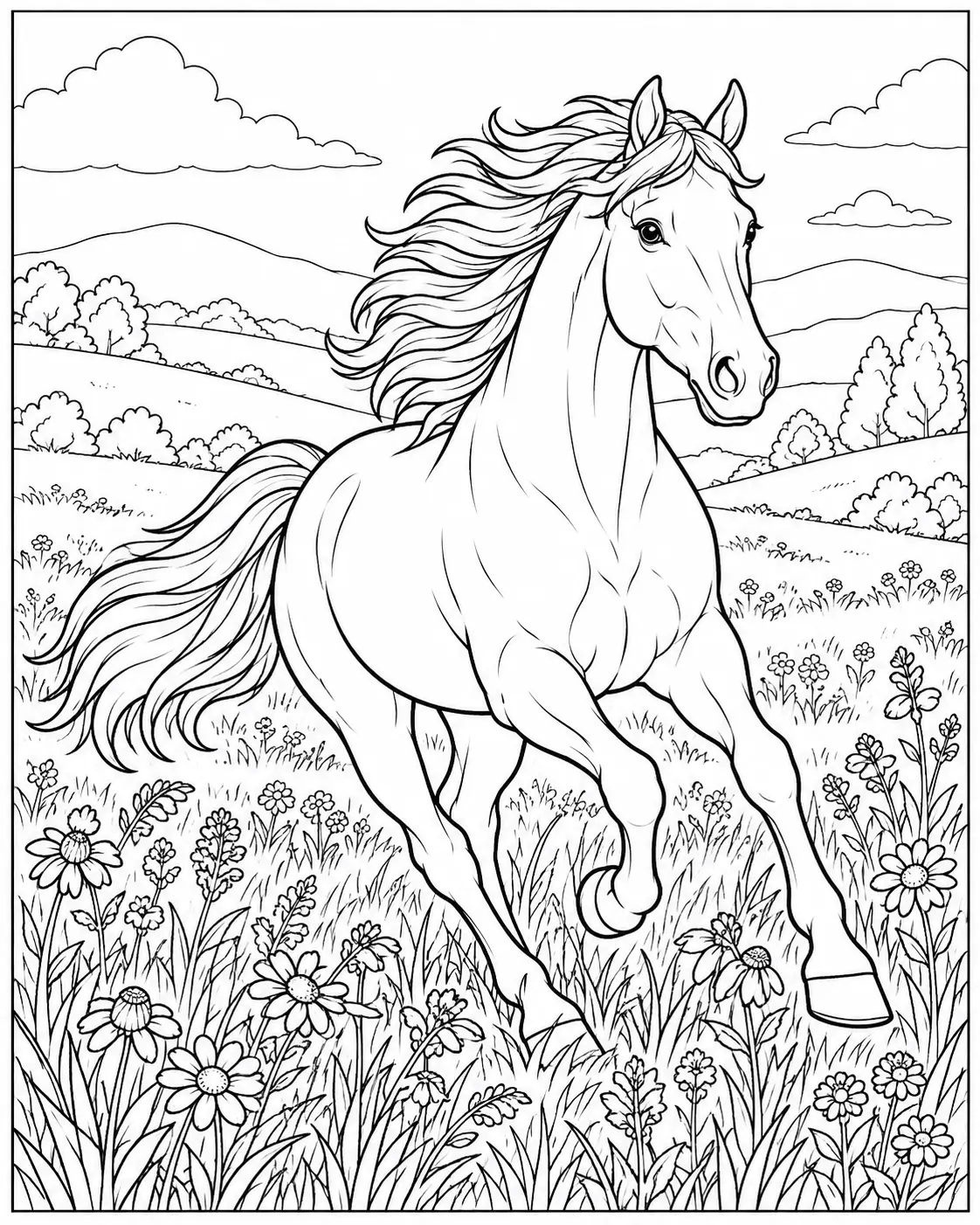
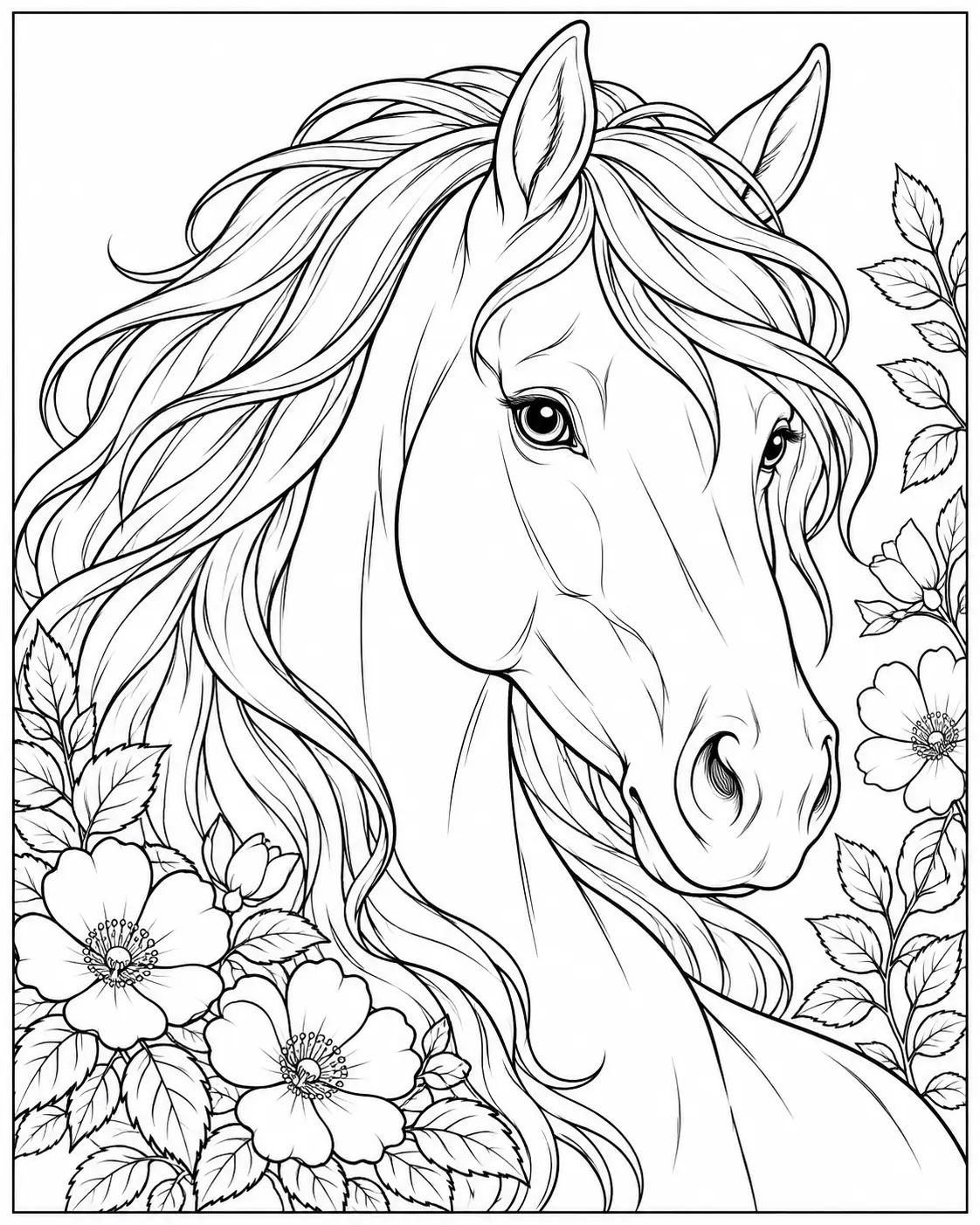
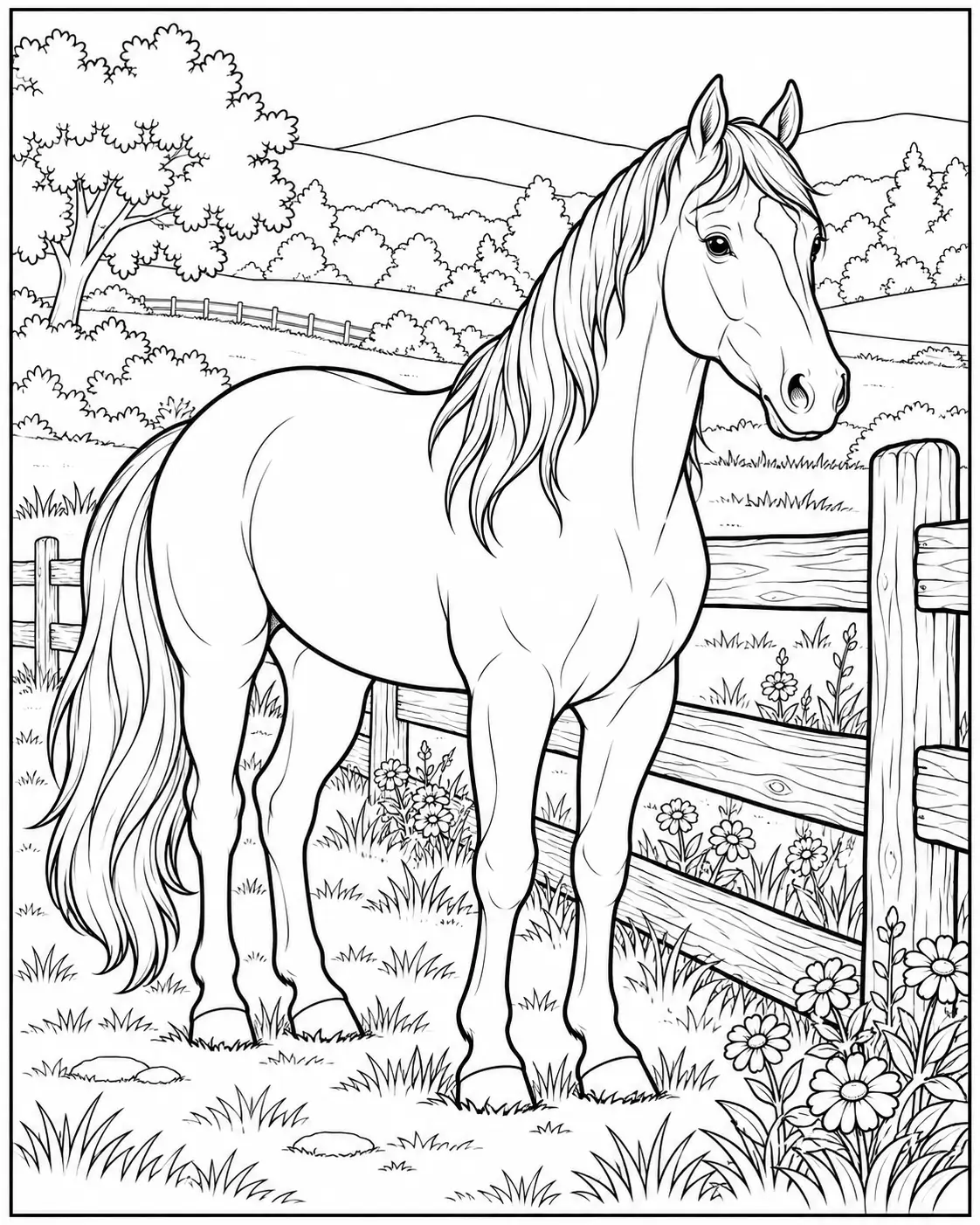
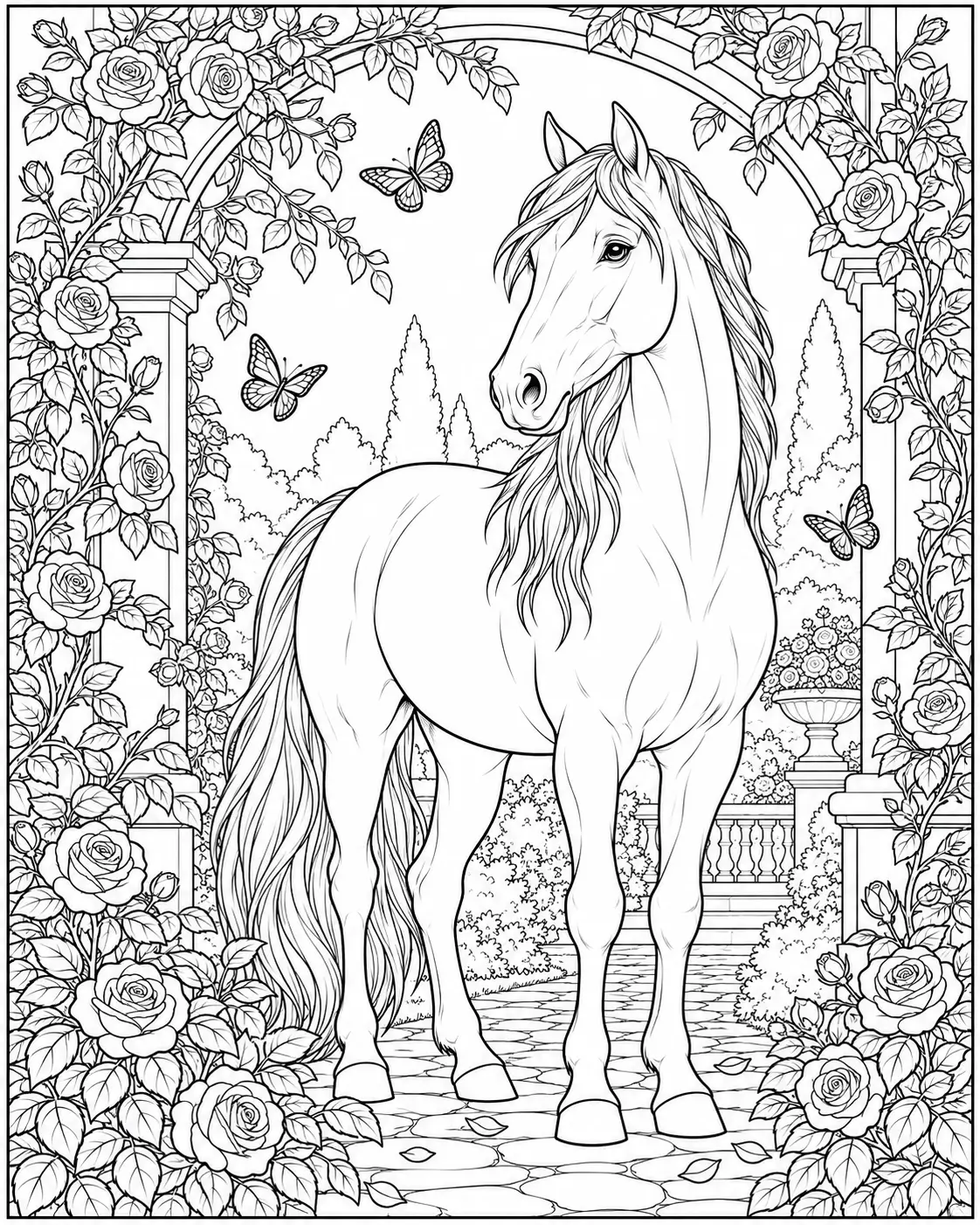
There are close-up portraits for anyone who likes spending time on the mane and facial details. The full-body pages give you larger spaces across the horse’s coat, legs, and tail. Other designs bring in sunflowers, roses, butterflies, falling leaves, water, fences, mountains, and stable equipment.
The settings also give each page its own feel. A horse running beside the ocean can use bright blues and sandy colors, while the autumn forest page suits burnt orange, brown, yellow, and muted green. The moon scene can go much cooler, with deep blues, purples, and pale silver tones around the horse.
You can also keep the background light and put most of your effort into the horse. There is no need to fill every small area with strong color.
Try Different Horse Coat Colors
Horse coats give you plenty of natural color combinations to work with.
A chestnut horse can range from warm reddish brown to a lighter copper shade. Bay horses give you a brown body with a darker mane, tail, and lower legs. Black horses can be colored with dark charcoal and softer gray areas instead of filling the entire body with one flat black.
Gray horses are also fun on coloring pages because you can leave some of the paper white and build the coat gradually with pale gray, silver, and darker accents.
For a palomino look, try a golden or creamy body with a pale mane and tail. You could also create spotted, painted, or completely imaginary horses. A soft pink mane, blue coat, or rainbow tail works perfectly well if that is the kind of page you feel like making.
Make the Mane the Main Feature
Several pages in this set have long or flowing manes, and those sections are good places to experiment with layered colors.
Instead of coloring every strand exactly the same, use two or three nearby shades. A brown mane might include tan, medium brown, and dark brown. A black mane can mix gray, charcoal, and black. Fantasy colors work the same way, such as lavender with purple or pale blue with navy.
The braided mane page gives you another option because each section of the braid can be colored separately. Small flowers woven through the mane can match the surrounding plants or use contrasting colors so they stand out.
Colored pencils are especially useful here because they let you build up the color without covering the line work.
Add Color to the Backgrounds
The backgrounds are there to give you something extra to work on after the horse is finished.
On the sunflower page, you can use warm yellow petals with brown or orange centers, then add several greens across the stems and leaves. The rose garden can stay traditional with reds and pinks, or you can mix cream, peach, yellow, purple, and soft pink flowers.
The mountain scene works nicely with cooler colors in the distance. Lighter mountains can help create the feeling that they sit farther behind the horse. Darker greens and browns can then be used closer to the front of the page.
For the beach scene, try keeping the water and sky in slightly different blue families. That prevents the two areas from blending into one large block of color.
Small changes like these can make a finished page feel much richer without requiring complicated techniques.
Coloring the Horse Pages with Markers
Markers work well for the larger areas on these pages, especially the horse’s body, open sky, fields, and broad leaves.
Test darker colors on a spare sheet first because some markers dry much stronger than they appear while wet. If you are printing at home, putting an extra sheet of paper behind the coloring page can also help protect the surface underneath from bleed-through.
For smaller details such as eyes, flowers, tack, butterfly wings, and individual sections of a braided mane, fine-tip markers are easier to control.
You can also combine markers and pencils. Use markers for broad areas, then add pencil over the top for softer changes in color or small details.
Using Colored Pencils
Colored pencils are a good fit for horse coloring pages because animal coats rarely look completely flat.
Start with a lighter layer, then slowly add darker color around the mane, legs, neck, or other areas where you want more depth. Keeping some sections lighter can make the horse’s shape easier to read.
The same method works for the scenery. Leaves can use two greens instead of one, flower petals can fade toward their centers, and mountains can become lighter as they move farther into the background.
You do not have to add extra detail everywhere. Leaving a few calmer areas gives the busier sections room to stand out.
Print a Few Copies and Try Different Versions
A page does not have to be colored only once.
Printing another copy gives you room to test a completely different horse coat or background palette without losing the first version. The same horse could become chestnut on one page, gray on another, and a fantasy color on the third.
This works especially well for the portrait pages because changing the mane and coat colors can make the same line art feel very different.
You could also print a few favorites for a quiet afternoon, a horse-themed activity, classroom use, or a small coloring folder to keep for later.
Which Horse Page Should You Start With?
For a page with lots of natural scenery, try the sunflower field, mountain trail, autumn forest, or rose garden.
The flowing mane portrait and braided mane horse put more attention on the horse itself. The mare and foal and two-horses page have a softer feel, while the beach horse, show jumper, and running herd bring more movement into the set.
If you prefer a classic countryside scene, the wooden fence, stream, stable, or western horse pages are good places to begin.
There is no order you need to follow. Pick the page that catches your attention, print it, and save the rest for another coloring session.
More Coloring Pages to Print
If horses are only the start of your next stack of coloring pages, FunFillColor has plenty of other themes you can print and keep nearby.
Animal pages pair especially well with this set, while flowers, landscapes, and nature scenes are useful when you want something with a similar calm feel but a different subject.
You can print just one horse page or keep all 20 together as a full set. Choose your favorite supplies, keep a spare sheet underneath the page if needed, and enjoy coloring them at your own pace.