

The ocean gives you plenty to work with on a coloring page. A sea turtle can be filled with earthy greens and browns, coral can take almost any color you want, and a group of jellyfish gives you room to play with softer shades. Then there are shells, dolphins, whales, tropical fish, rocky reefs, and all the small details hiding along the ocean floor.
The collection includes 20 free ocean coloring pages for adults, with a good mix of sea animals, underwater scenes, shells, coral reefs, and coastal views. Some pages focus on one large animal, while others fill the page with smaller objects and sea life. That variety makes it easy to choose a page based on what you feel like coloring that day.
Each design can be downloaded individually, so you can print your favorites or work through the whole collection.
A Mix of Ocean Scenes to Color
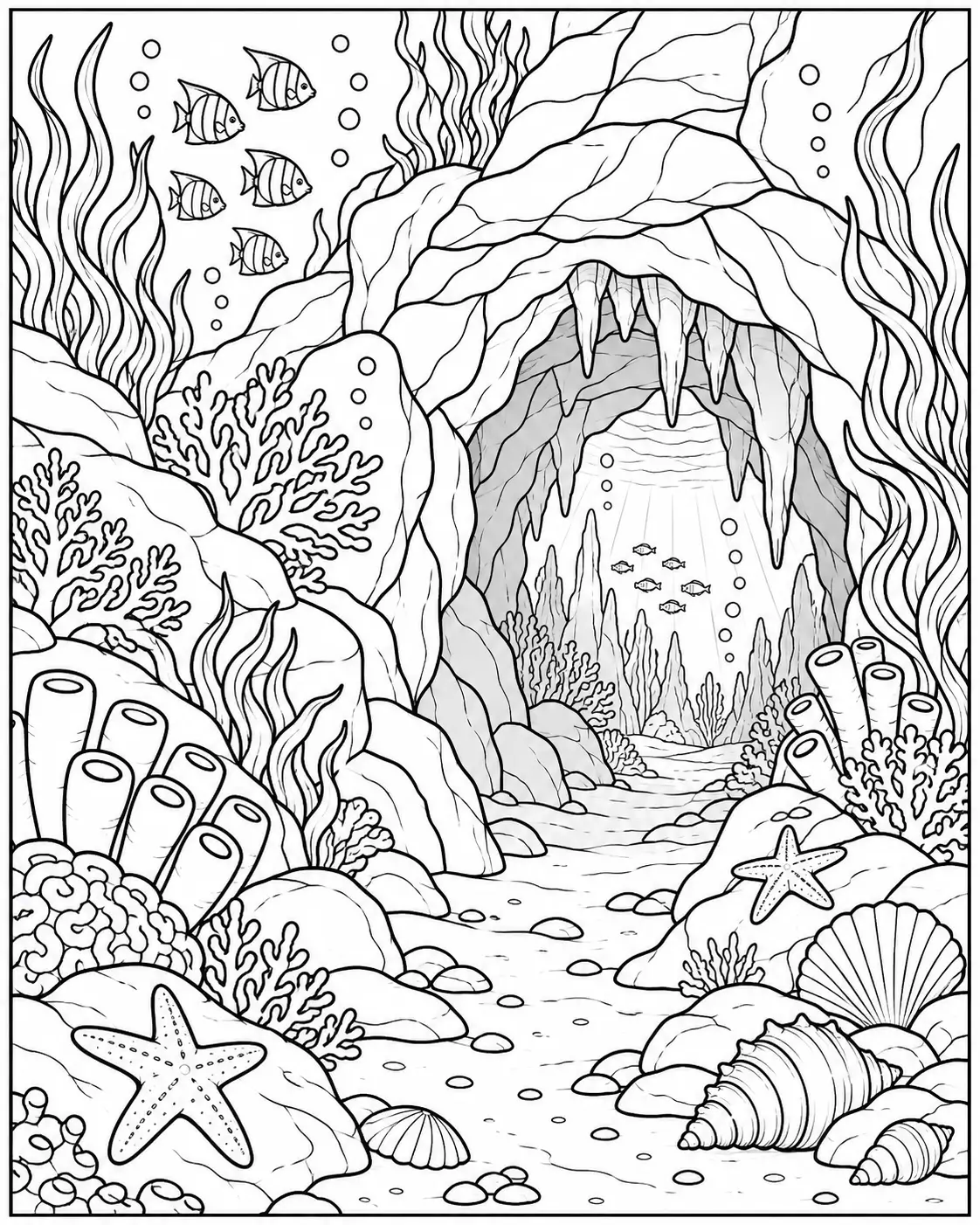
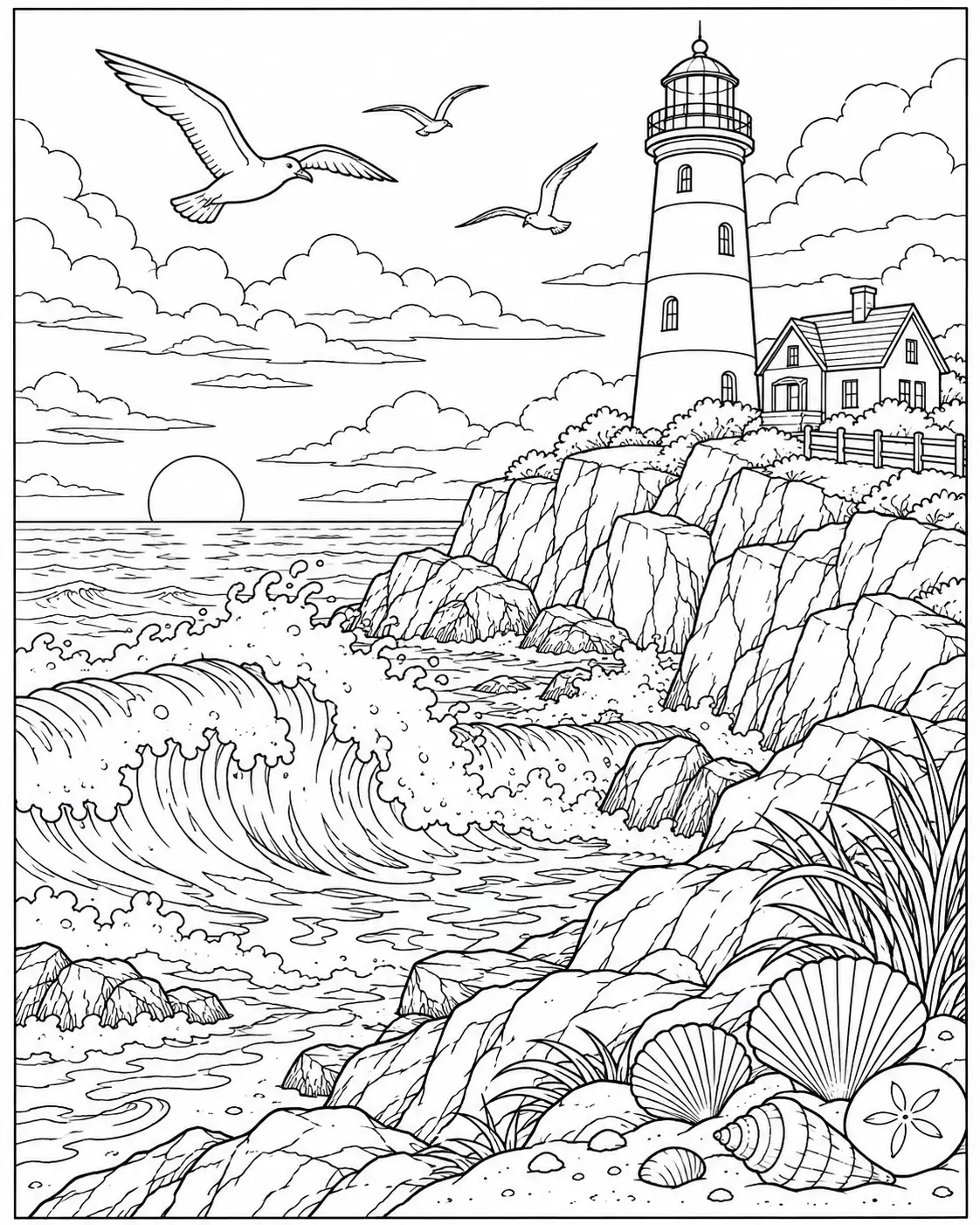
A set of twenty pages becomes repetitive pretty quickly if every design follows the same setup. That is why this collection moves between open-water scenes, close-up animals, coral reefs, shells, a lighthouse, and the darker world of deep-sea creatures.
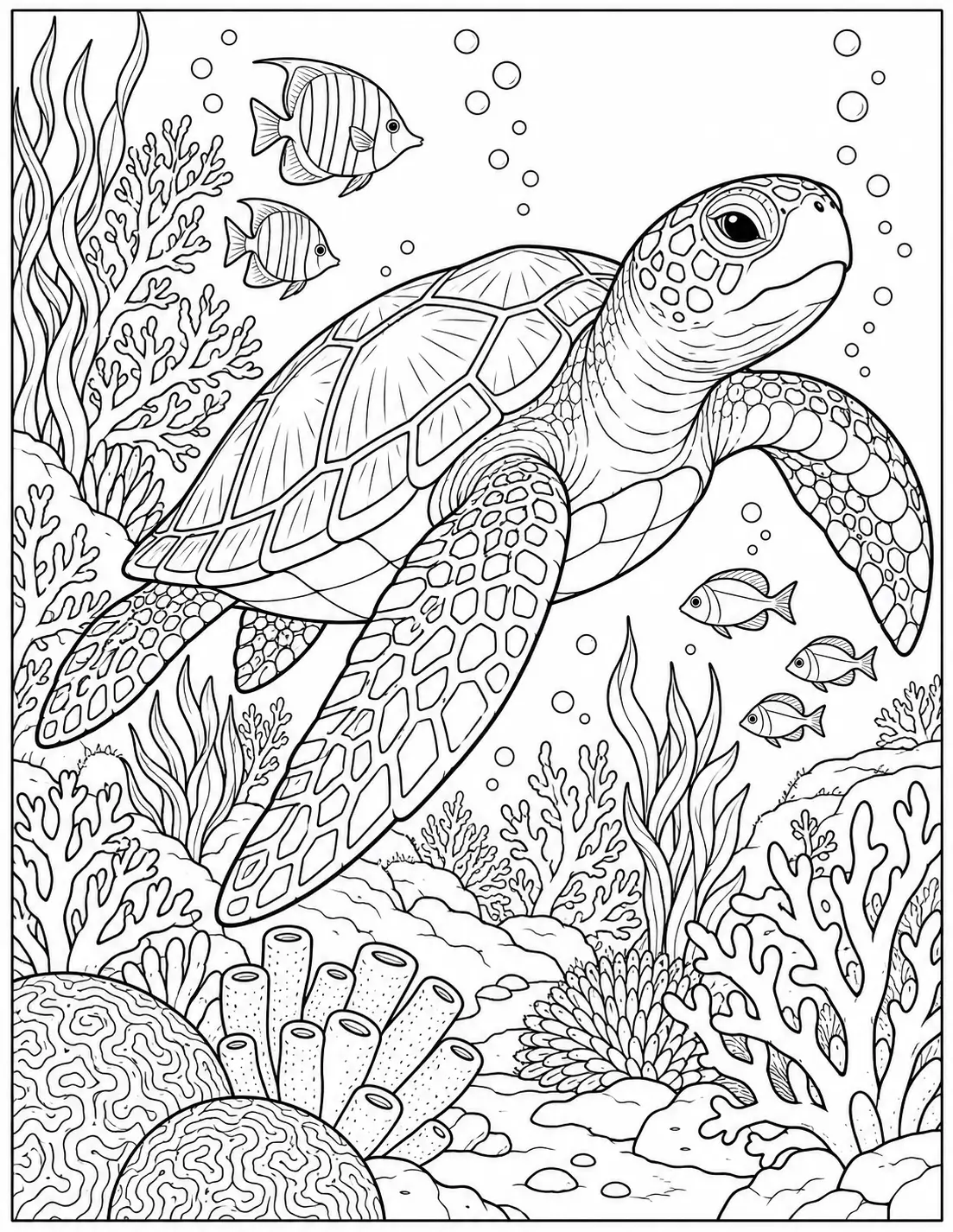
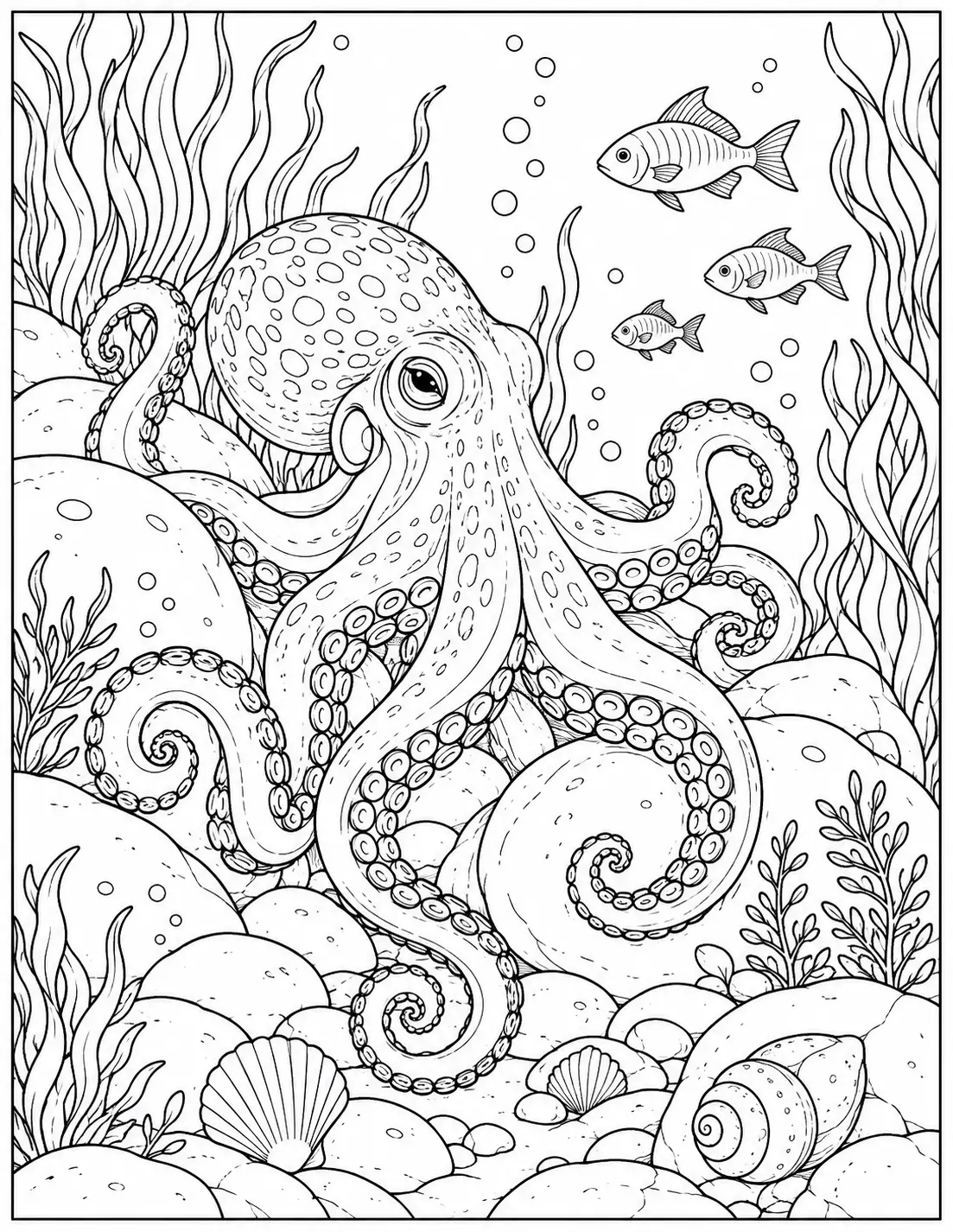
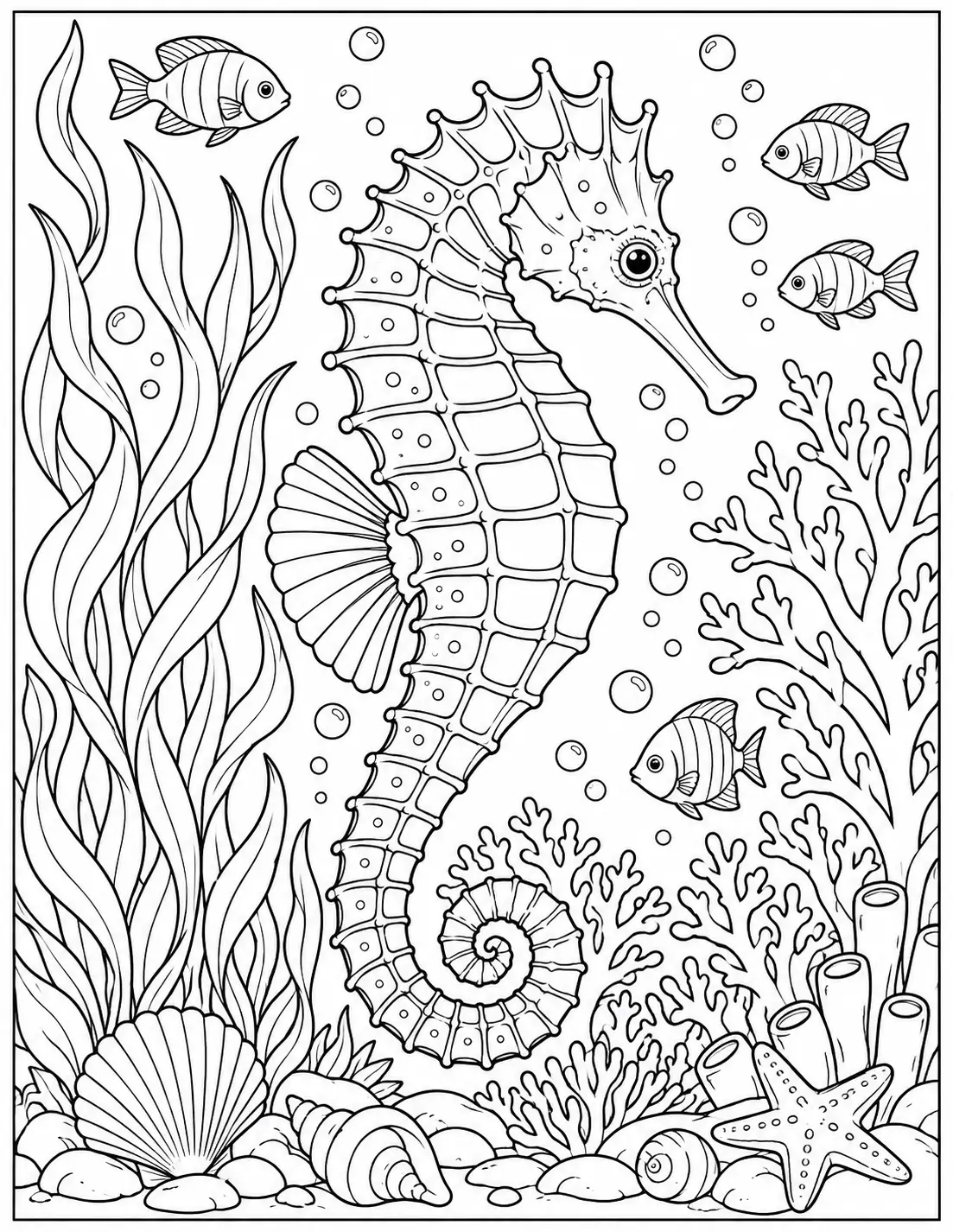
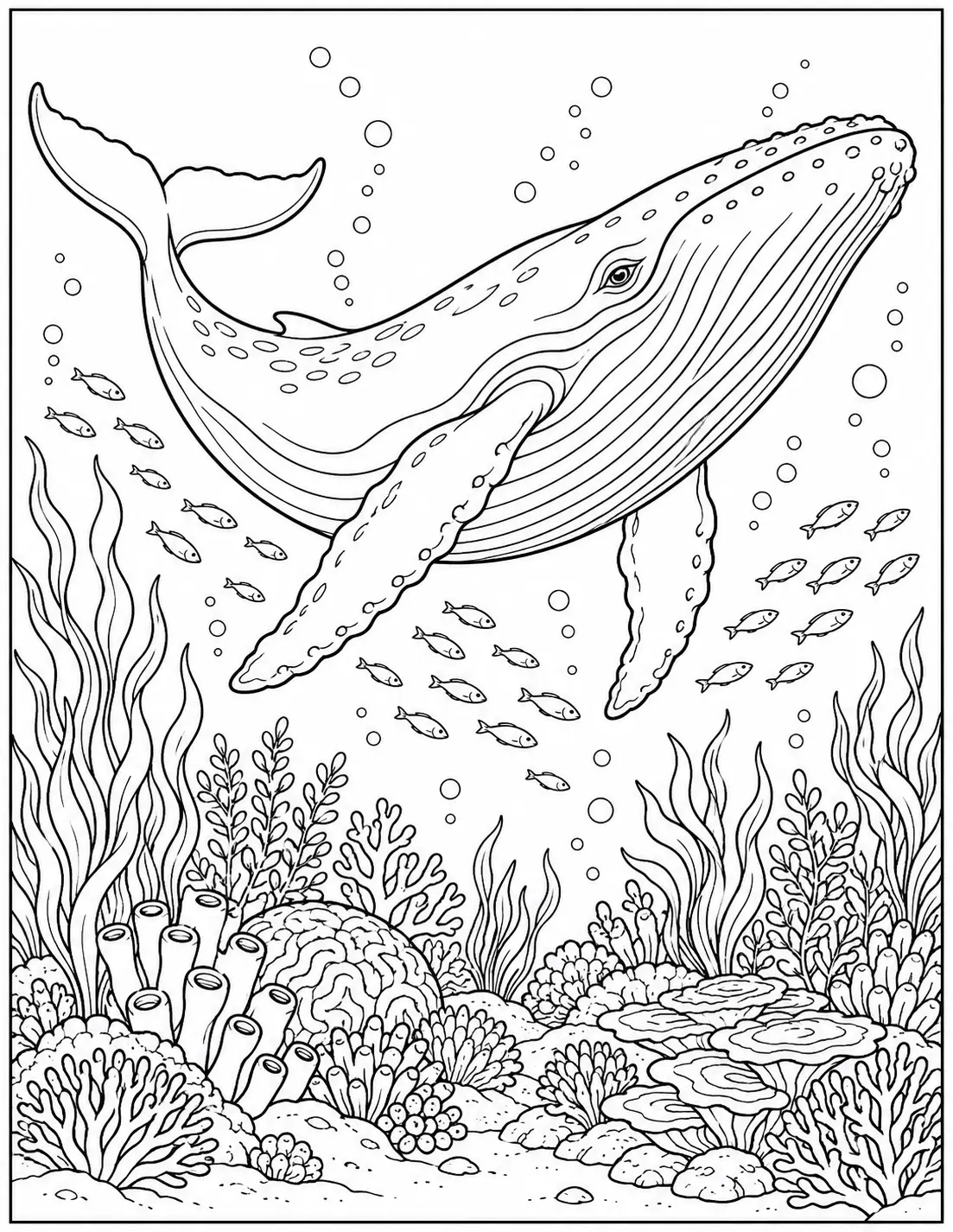
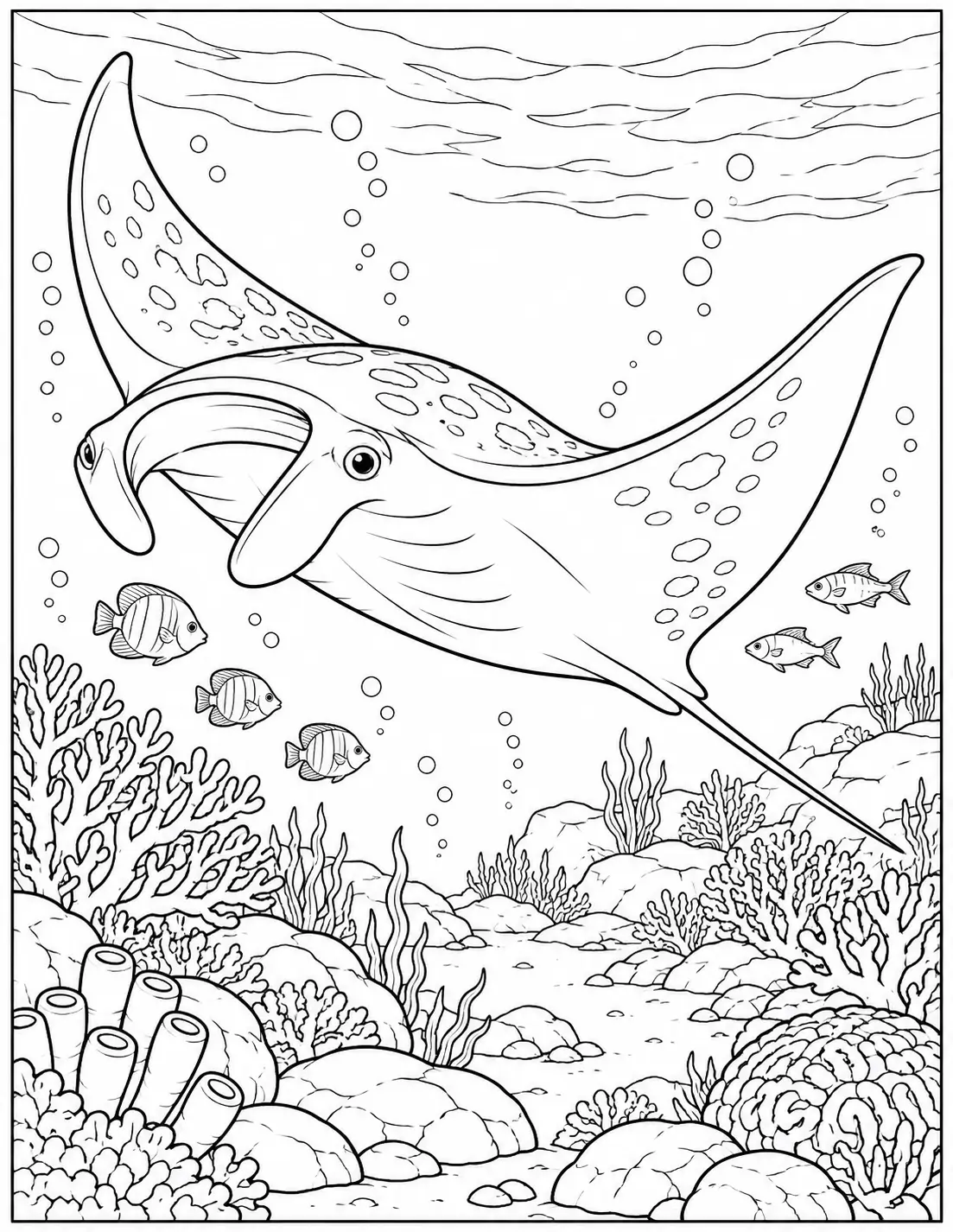
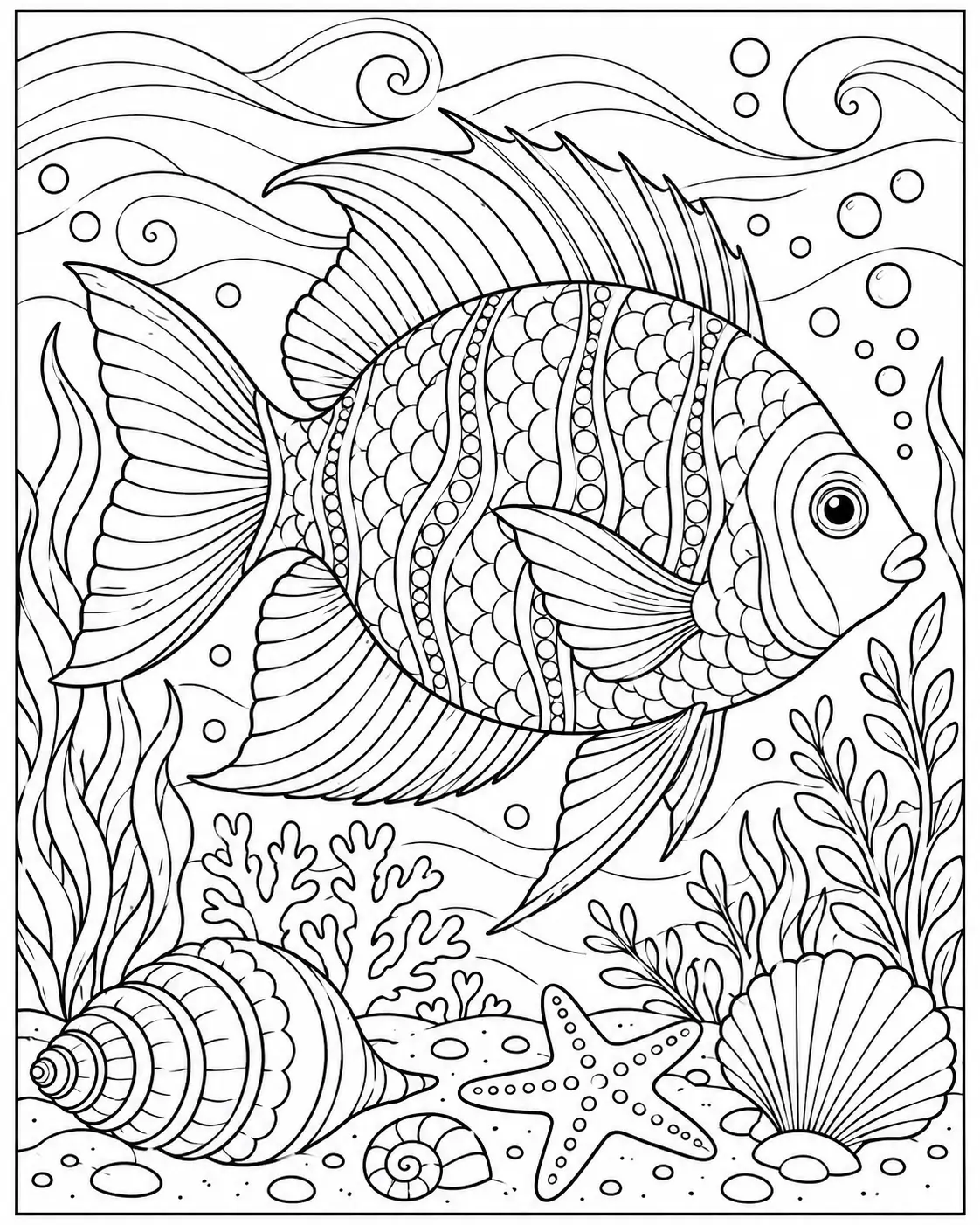
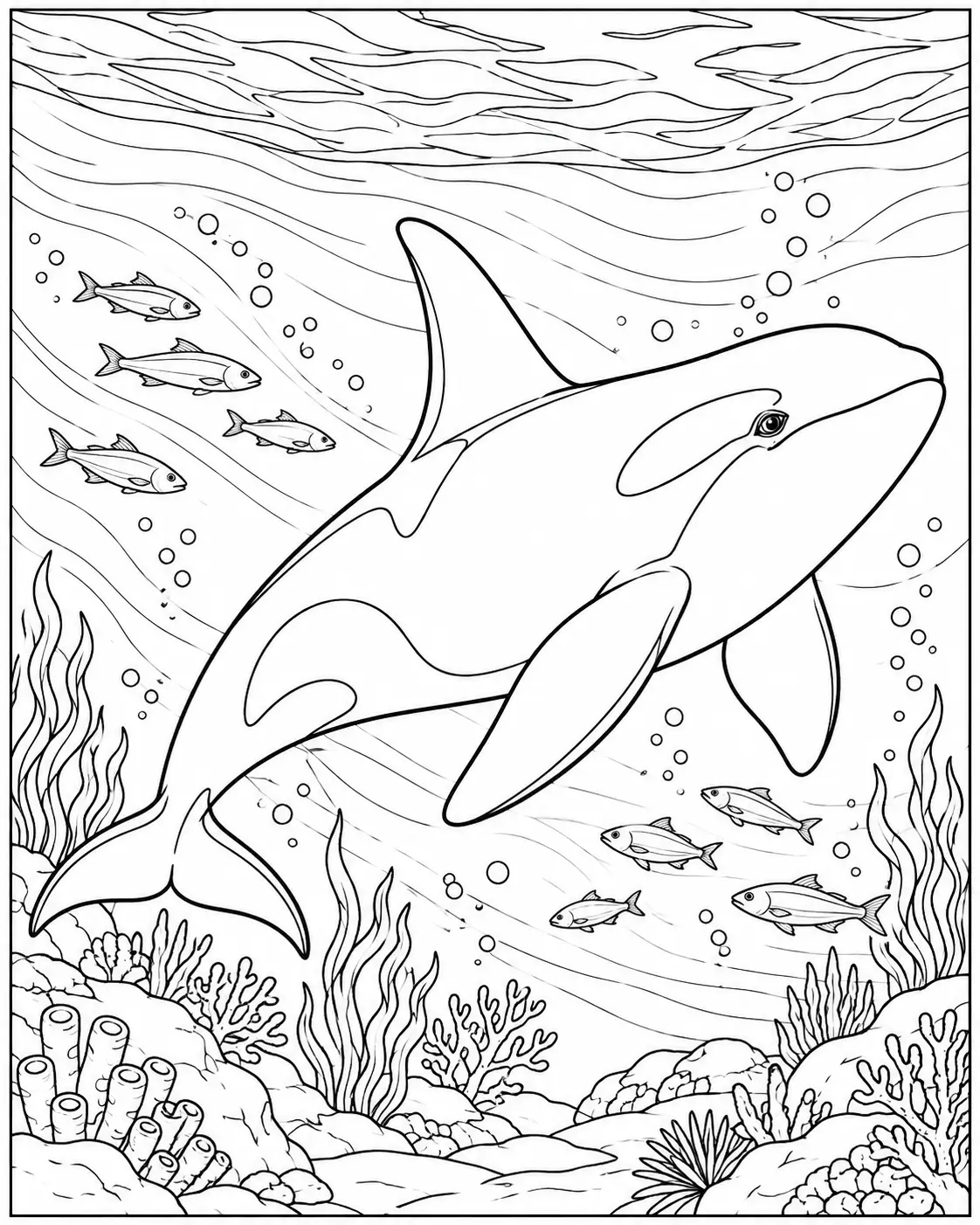
If you prefer coloring one large subject, the whale, manta ray, or orca pages give you plenty of open areas without filling every inch of the page. The octopus, seahorse, turtle, and tropical fish pages have extra patterns and smaller sections that work well when you want to spend longer on a single design.
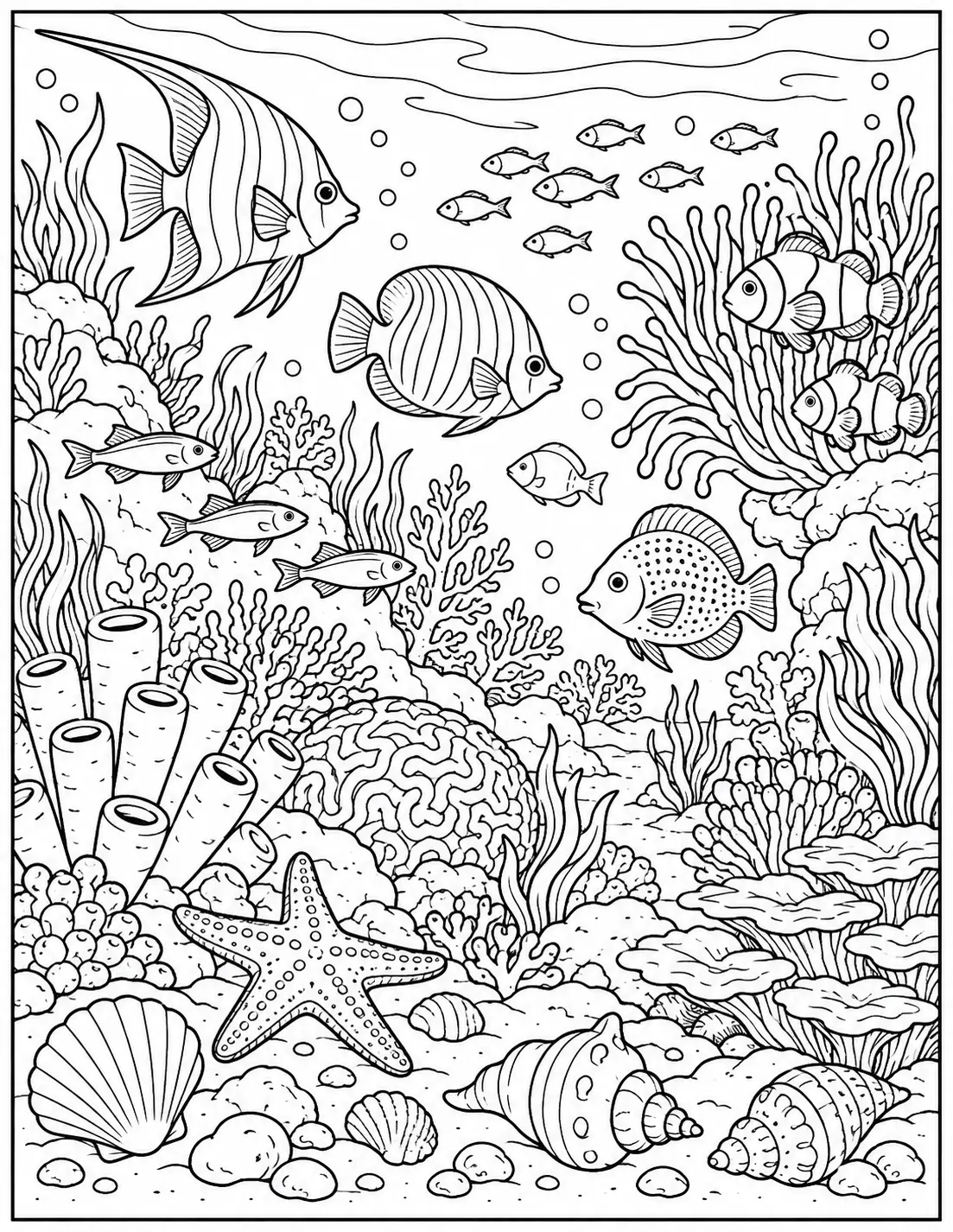
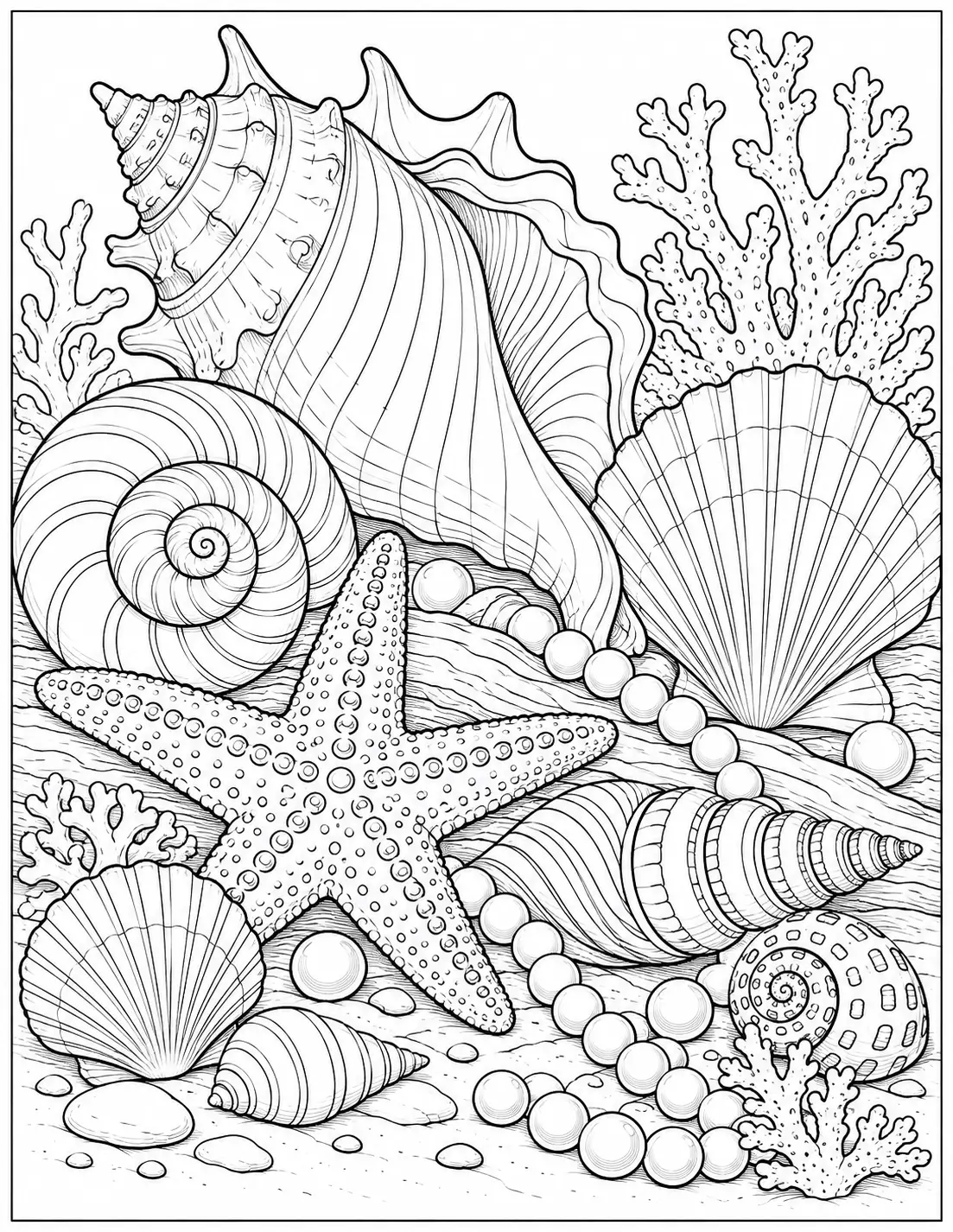
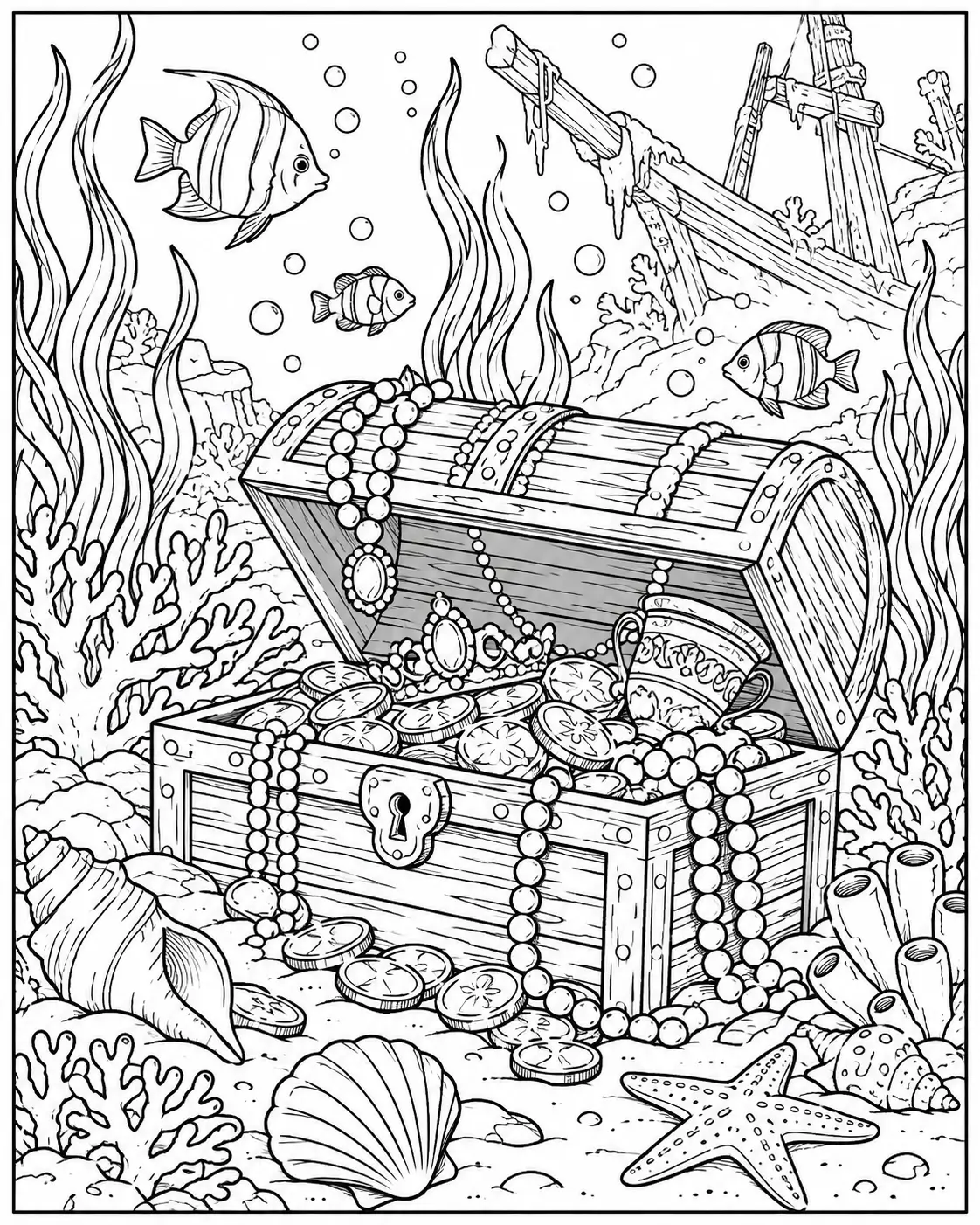
The coral reef and treasure chest pages feel busier because there are more objects to work through. Shells, starfish, coral, fish, sea plants, rocks, and bubbles break the scene into lots of separate areas. You can finish these in one sitting or come back to them over several coloring sessions.
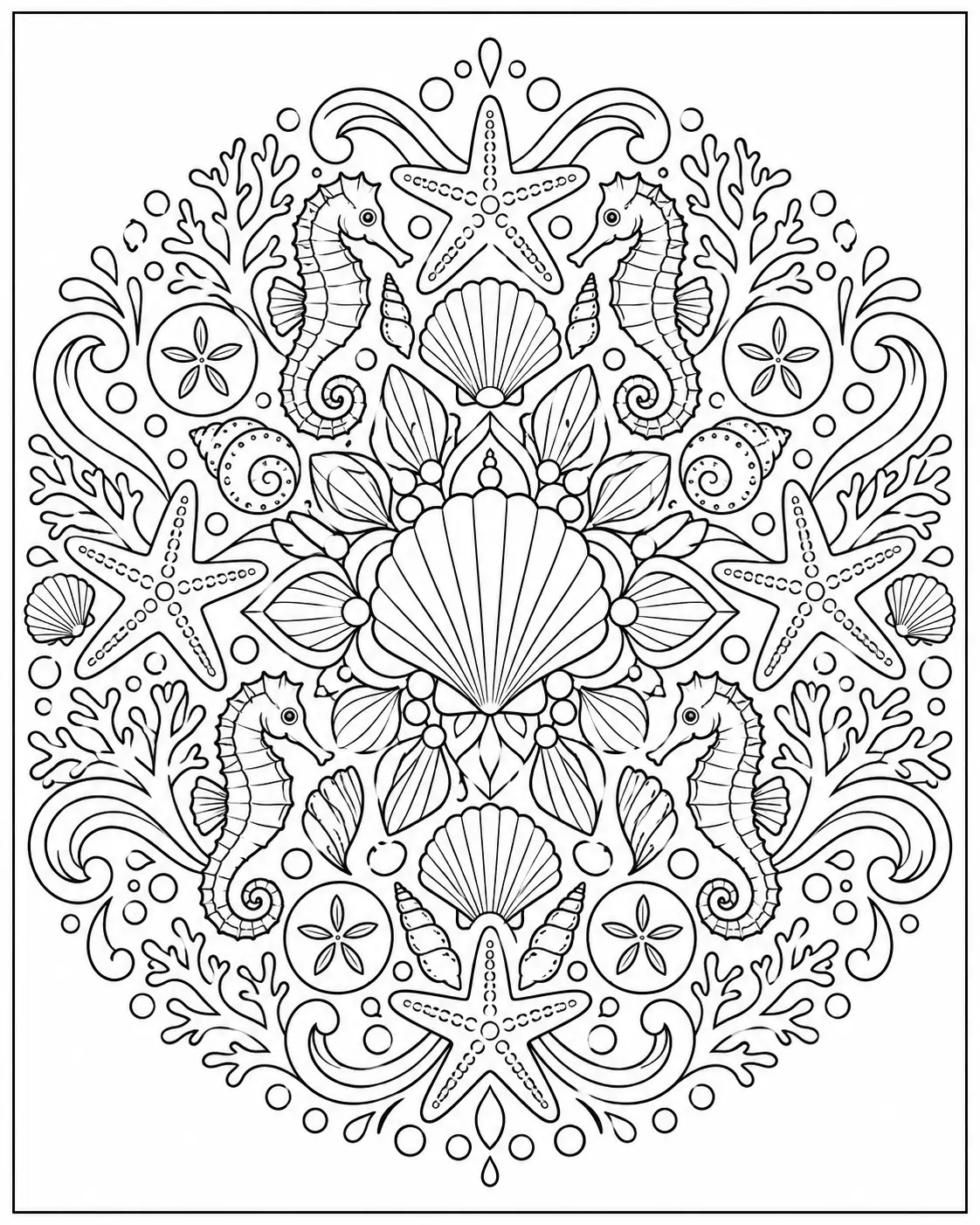
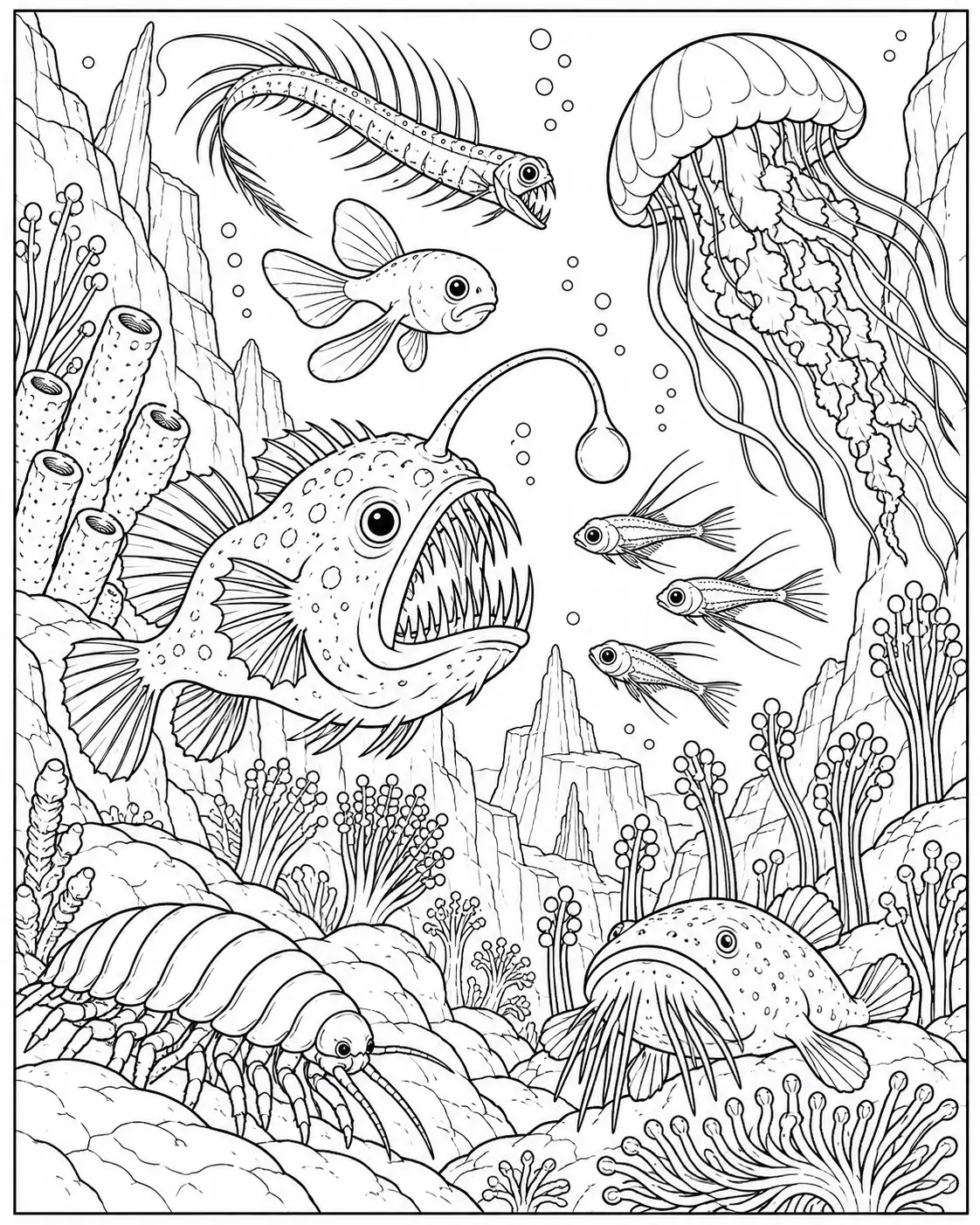
There are also a few pages that feel quite different from the rest. The lighthouse brings the scene above the water, while the ocean mandala uses a balanced arrangement of shells, seahorses, starfish, and coral instead of a natural underwater setting. The deep-sea page has unusual fish and other creatures that give you a chance to use colors you might skip on a typical reef scene.
Selecting Colors for Ocean Pages
There is no reason to stay completely realistic unless you enjoy coloring that way. Real sea life already comes in a huge range of colors, and a coloring page gives you even more freedom.
For a natural reef scene, blues and blue-greens work well for the surrounding water. Coral can be orange, pink, red, yellow, purple, or a mix of several shades. Sea plants can stay green, or you can bring in deeper teal, brown, and muted red.
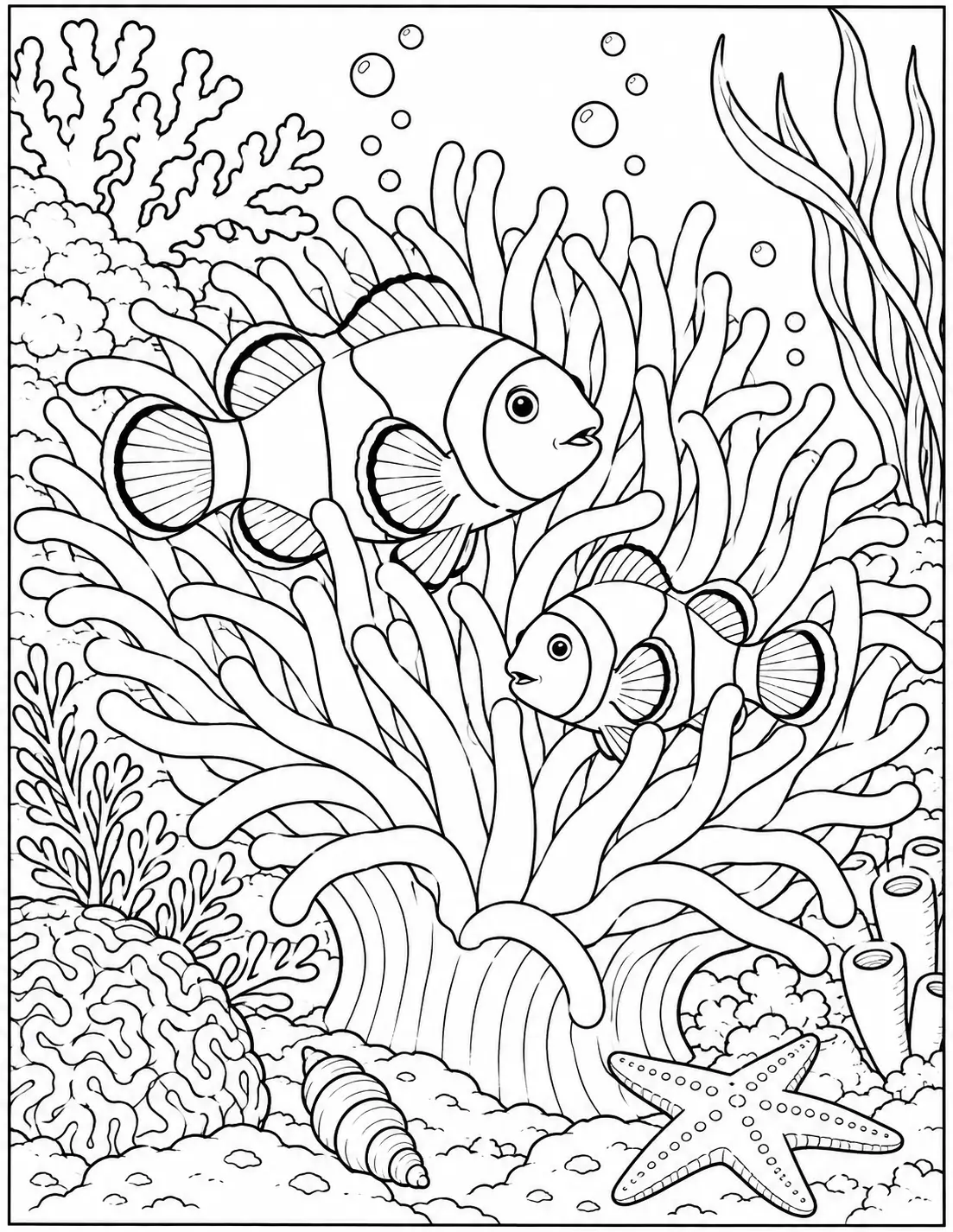
Tropical fish give you plenty of room to use brighter pencils or markers. Yellow and blue, orange and white, purple and pink, or green and turquoise can all work well. Repeating one or two colors on several fish can help a busy page feel connected without making every fish identical.
Shell pages work well with softer tones. Cream, peach, pale pink, tan, muted purple, and light blue can give each shell a different look while keeping the full page calm. Small changes in pressure with colored pencils can also create lighter and darker areas without needing a long list of colors.
For the deep-sea page, you can go in a completely different direction. Dark blues, purples, cool greens, and unusual bright accents fit the strange shapes of deep-water animals. Since many deep-sea creatures already look unusual, imaginative color choices feel right at home.
Simple Ways to Make the Pages Look Better
You can get a lot out of a coloring page with a small set of pencils or markers. One useful approach is to pick a limited group of colors before you begin instead of reaching for a new shade every few minutes.
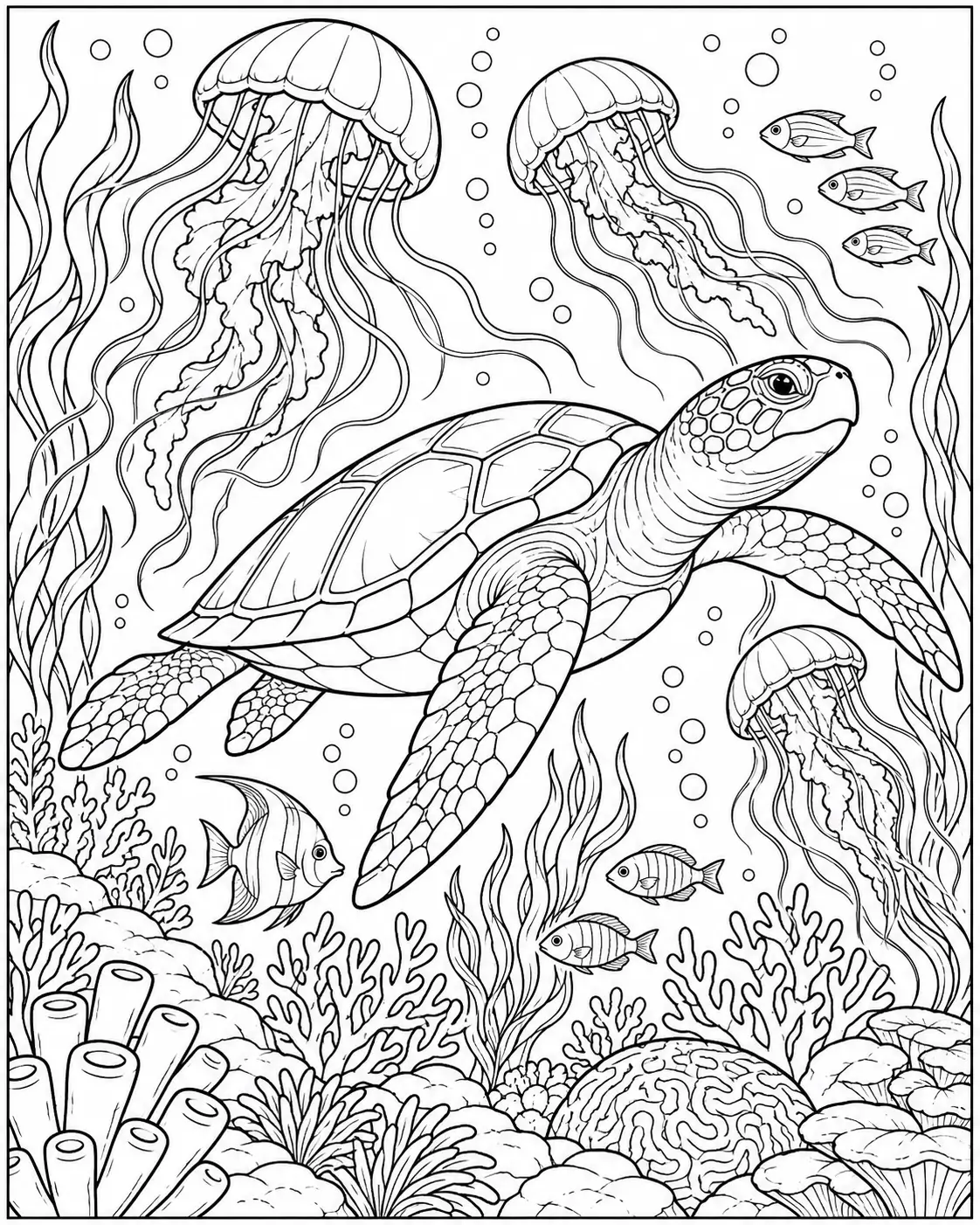
For example, a sea turtle page could use olive green, light green, brown, sand, pale blue, and one coral color. Repeating those shades in different areas keeps the scene connected while still giving you enough variation.
Another option is to choose one main color family and add a few contrasting accents. A mostly blue and turquoise reef can look great with small areas of orange or yellow fish. A shell page filled with creams and pinks can use a little blue around the smaller details.
Colored pencils are useful on pages with scales, shells, tentacles, and coral because you can control how dark each section becomes. Markers are faster for larger areas such as open water, broad fins, and big shells. If you like using both, markers can fill larger sections while pencils handle the smaller patterns.
Just check that your markers do not bleed through the paper before working on the full design. Printing on slightly heavier paper can help if your printer supports it.
Ocean Coloring Pages for a Quiet Coloring Session
Some coloring pages demand constant attention because every part is tiny. Others finish so quickly that there is barely time to settle into them. These pages sit between those two ends.
Large animals give you clear areas to color, while coral, scales, shells, bubbles, and sea plants add enough smaller sections to keep the page interesting. You can spend extra time on those details when you want to, or keep the coloring simple and use larger blocks of color.
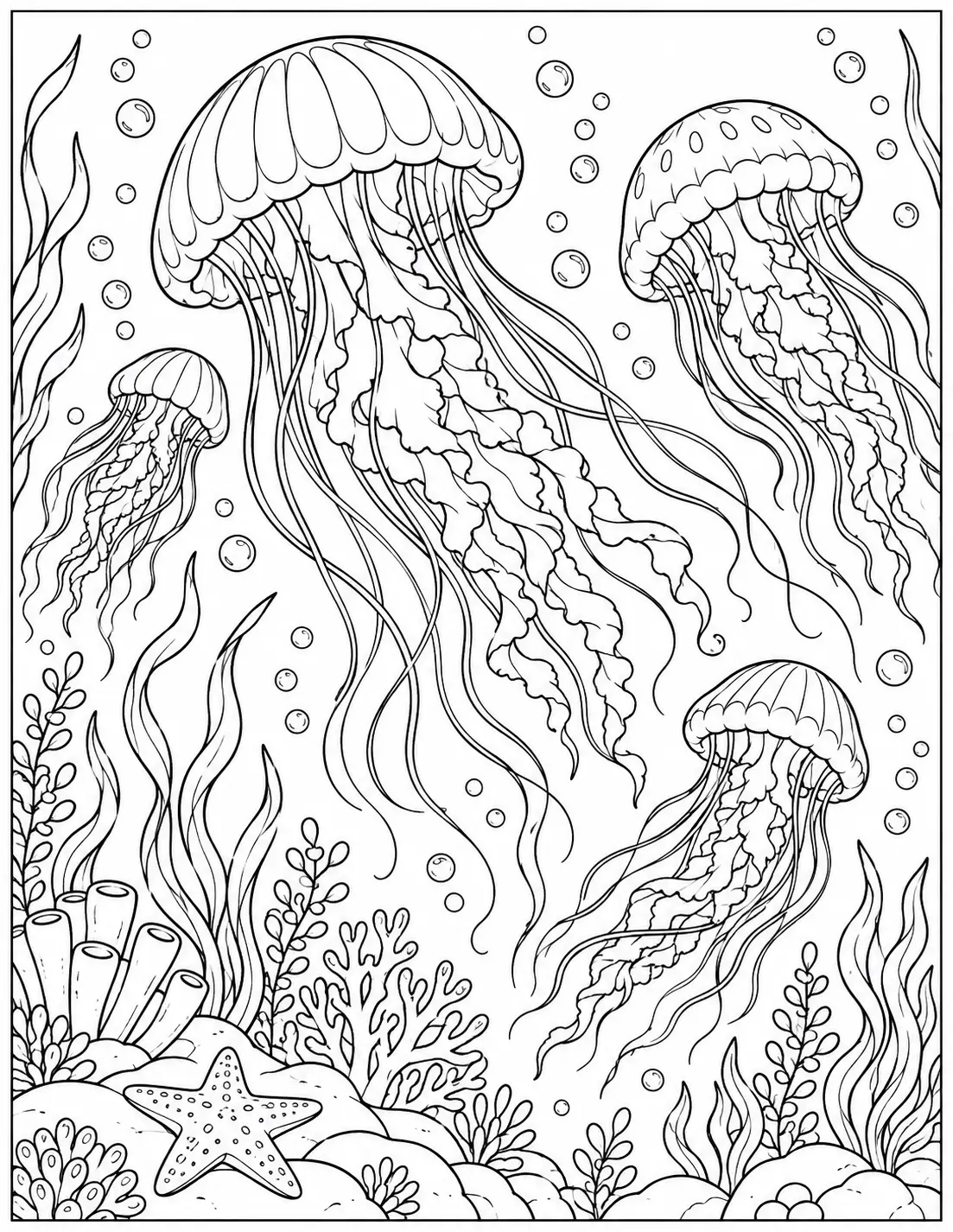
The jellyfish page is a good choice if you enjoy long flowing shapes. The tentacles can each use a different shade, or you can repeat a small palette across all of them. The octopus gives you similar curved lines but adds suction cups, rocks, and other small details.
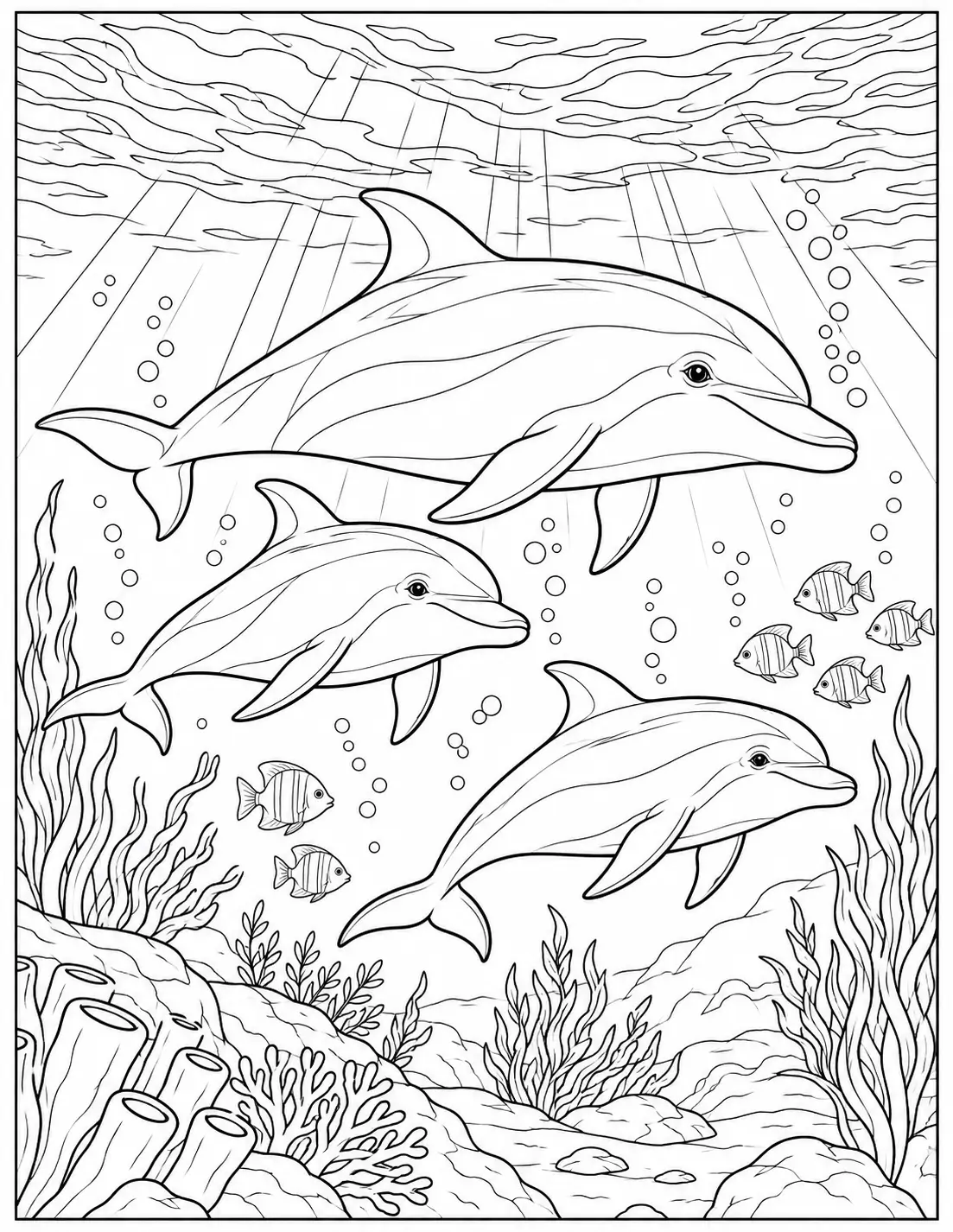
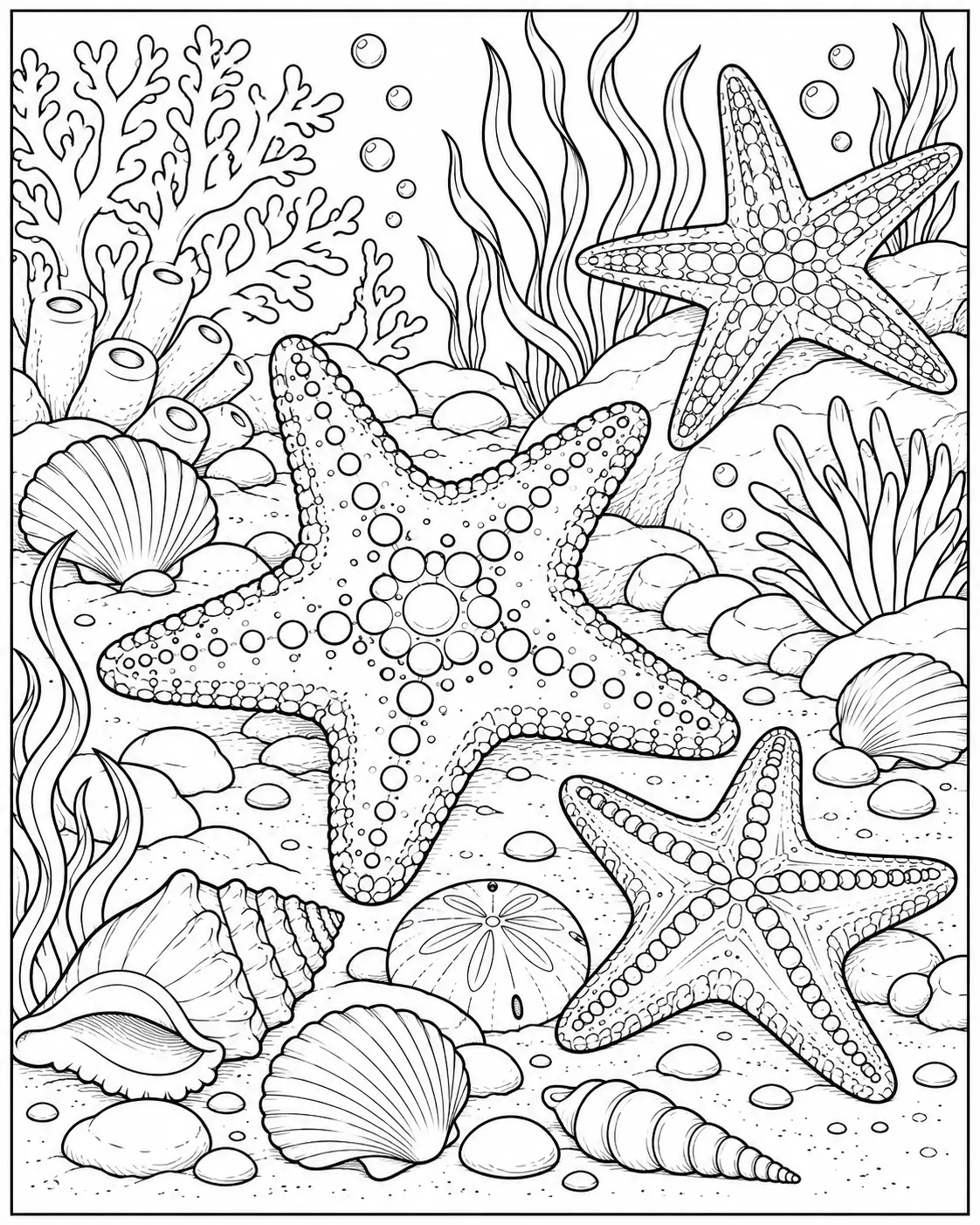
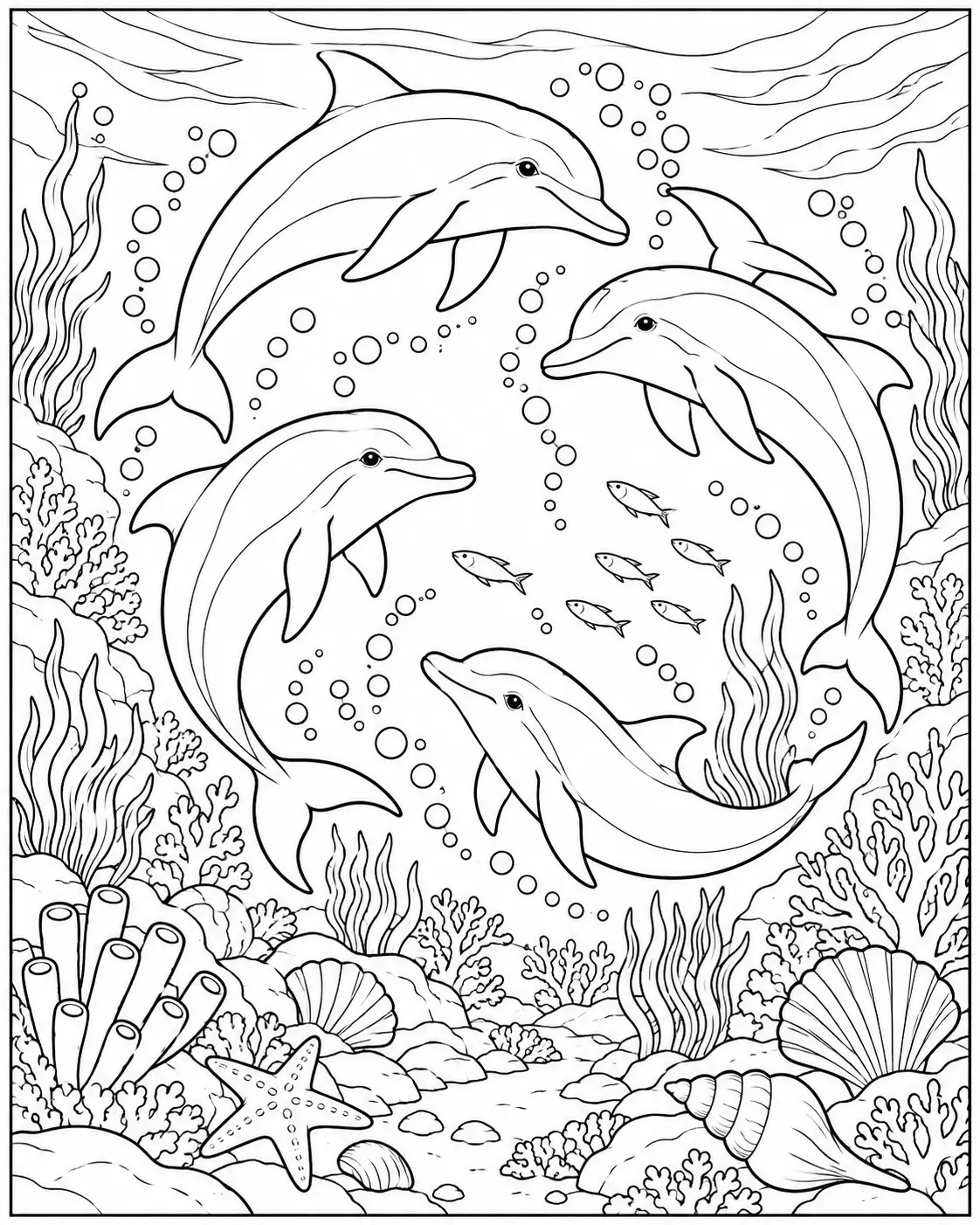
For something calmer, try the manta ray, whale, or dolphin pages. Their larger bodies leave room for blending and softer color changes. If you would rather fill lots of separate objects, the seashell collection, starfish page, treasure chest, and coral reef scene have plenty to keep your pencils moving.
Printing Your Coloring Pages
Each design is available as its own printable file, which makes it easy to choose only the pages you want.
For a standard home printer, regular white printer paper works fine for pencils and crayons. If you plan to use markers, gel pens, or heavier coloring, thicker paper may give you a better result. Check the paper weight your printer accepts before loading cardstock or heavier sheets.
Use the print preview before printing so you can confirm that the full border sits inside the page. Printer settings can vary, and choosing a setting such as “fit to page” can help keep the outer lines from being cut off.
If you want to test a new pen or marker, print an extra copy of one page first. That lets you check for bleeding or smudging without affecting a page you have already spent time coloring.
Ideas for Using the Finished Pages
Finished pages can stay in a coloring folder, but they can also be used for small projects around the house.
A favorite whale, turtle, or lighthouse page can go into a simple frame. Shell and coral pages can work well as seasonal wall art during summer. You can also trim a finished page and use part of the design on a handmade card, journal page, or scrapbook.
If several people are coloring together, print different pages and use the same small color palette. The finished pages will look related even though the subjects are different.
You can also print the same page twice and try two completely different color schemes. A realistic turtle on one copy and a bright patterned version on the second can produce two very different results from the same line art.
Which Ocean Page Should You Start With?
If you want a page with a clear main subject, start with the sea turtle, whale, manta ray, or orca. Their larger shapes give you plenty of space to settle into the coloring without handling dozens of tiny sections straight away.
For a page with more small details, try the treasure chest, coral reef, seashell collection, or starfish design. These have more separate objects, which makes them useful when you prefer changing colors often.
The jellyfish and dolphins have a lighter underwater feel, while the lighthouse gives you a break from reefs and sea animals. The ocean mandala is a good pick if you enjoy repeated shapes and balanced patterns.
With 20 ocean coloring pages for adults in the collection, you can switch between simple animal-focused pages and fuller underwater scenes without every design feeling like a variation of the same page.
Also Check Out:
Frequently Asked Questions
Are these ocean coloring pages free to print?
Yes. You can download the individual pages you want and print them for your own coloring activities.
Can I print the same page more than once?
Yes. Printing another copy is useful if you want to test different colors, use another type of coloring material, or color the same design again.
What should I use to color these pages?
Colored pencils, crayons, gel pens, and markers can all work. Your choice mainly depends on the paper and the amount of control you want. Pencils are easier for smaller areas and gradual color changes, while markers cover larger sections quickly.
Which page has the most sea life?
The coral reef scene contains a broad mix of fish, coral, sea plants, shells, and other reef details. The deep-sea page also includes several creatures, but it has a very different setting.
Which pages are good if I prefer larger coloring spaces?
Try the whale, manta ray, orca, dolphins, or sea turtle designs. They have strong central subjects with larger sections that can be filled without constantly switching colors.
Can I use different colors instead of realistic ocean colors?
Of course. A purple turtle, pink coral reef, or rainbow jellyfish works perfectly well on a coloring page. Choose realistic colors when you want them, and change them whenever another combination looks more fun.